
Like mother, like daughter: what the saying means for adult daughters
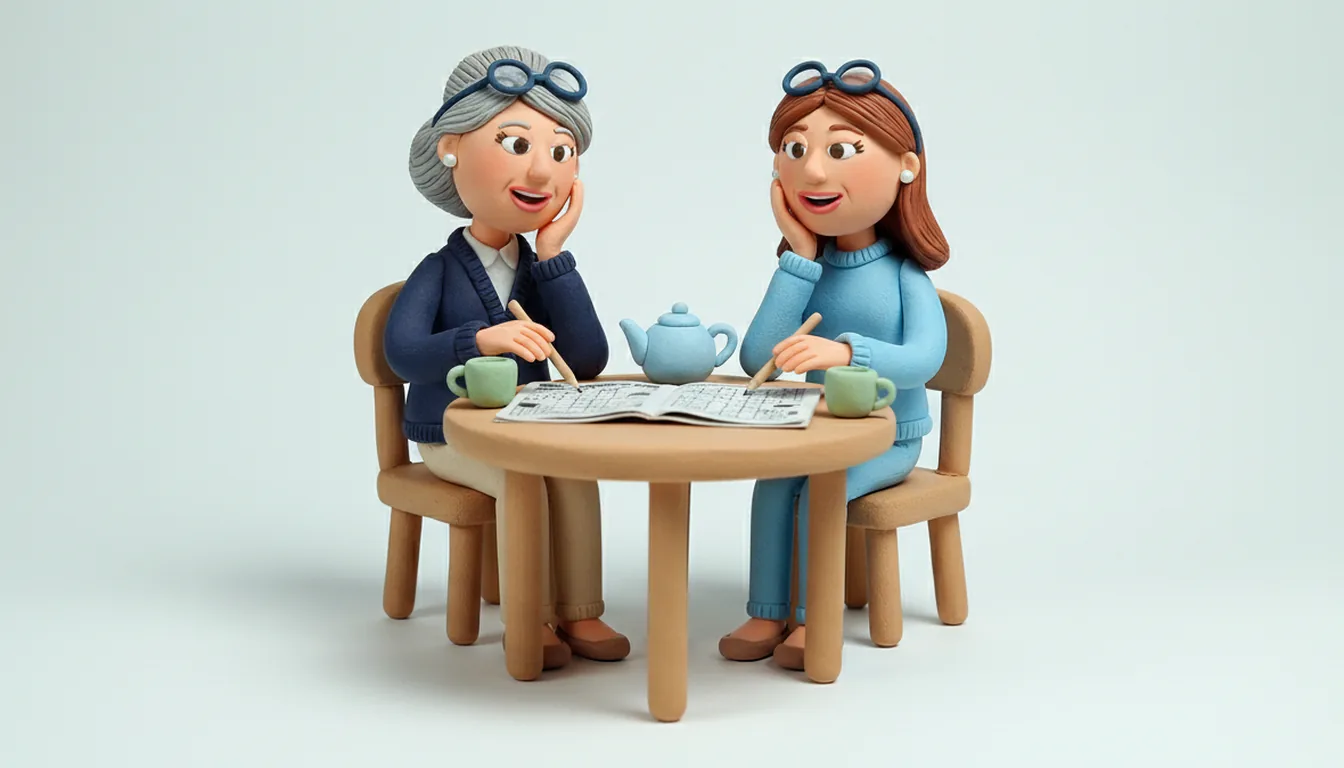
"Like mother, like daughter" means that a daughter is similar to her mother. She may look like her, talk like her, cook like her or make the same mistakes. People say it when they notice the likeness, often with a smile.
An example: Lena is 33 and once promised herself she would never hum while she cooks. Her mother hummed over every pot of soup Lena can remember, always the same old song. Last Christmas, Lena's partner leaned on the kitchen door and laughed. Lena was stirring the gravy with one hand on her hip, humming that exact song. In the living room her mother was writing next year's birthdays into a paper calendar. Lena has never written down a birthday in her life. She remembers them on the morning, or the morning after.
So is Lena like her mother or not? The honest answer is both.
What does "like mother, like daughter" mean?
It is often said about a grown daughter, once she has a home, a temper and habits of her own that can be compared. You will also hear it as "like mom, like daughter", and sometimes the other way round, "like daughter, like mother", when a mother picks up something from her child.
The idea is very old. An early written form is in the Bible, in the Book of Ezekiel: "As is the mother, so is her daughter." Its brother in English is "like father, like son".
Praise, teasing or a warning: how people use it
The same four words can carry very different moods.
- As praise. "Your mom was the best baker in town, and now look at your bread. Like mother, like daughter."
- As teasing. "She is late again? Her mom never made it to a single school play on time. Like mother, like daughter."
- As a warning. Some people say it about a partner's family: look at the mother to see the daughter in thirty years. This use is unkind, and it is often wrong.
The tone usually tells you which one you are getting.
Like father, like daughter
When a daughter takes after her dad, people switch the saying to "like father, like daughter", or "like daddy, like daughter" when they want it to sound sweet. It means the same thing: she has his laugh, his love of football, his habit of fixing things with tape, or his short temper.
Many daughters hear both versions over the years. One aunt calls her a copy of her mother, another calls her a daddy's girl. Both can be right, because a person picks up different things from different people. We look at the dad side in more depth in the father and daughter relationship.
What daughters pick up from their mothers
Children copy what they see every day, and a mother is often the person they see most. By the time a daughter is grown, many of her habits came from that kitchen. It's one reason a parent's "do as I say" so rarely works in a family.
- Words and phrases. "We'll see." "Because I said so." "Put a sweater on." Many women hear their mother's voice come out of their own mouth.
- How a home runs. Where the cups go, how often the sheets get changed, and what counts as clean.
- Food and hosting. The Sunday roast, the way guests are fed until they cannot move, the recipe that never got written down.
- How to argue. Some families shout and make up in ten minutes. Others go quiet for a day. Daughters tend to start out arguing the way they saw it done.
- Money habits. Saving every coupon, or spending on the good things and laughing about the bill.
- Small things. A laugh, a way of standing, the hand on the hip while stirring the gravy.
None of this is fixed. A grown woman can keep the habits she likes and drop the rest, and many do it on purpose.
What a daughter does not get from her mother
Habits are learned, so they can look like personality from across the room. Personality type is something else. In Typeza, a type is not passed from parent to child. A mother and her grown daughter may share a type, or have two of the sixteen that see the world in very different ways.
That is why Lena can hum her mother's song and still live in a completely different way. The song came from years in the same kitchen. The way she plans, or does not plan, comes from her own type.
When a mother and daughter do share a type, they are in an Identity relationship. They understand each other with few words and share the same blind spots. More often they are two different types, and the saying is only half true.
The same habit, a different reason behind it
Take one family tradition, Sunday lunch for the whole family, and hand it down to daughters of different types. The lunch may look the same from outside. Each daughter keeps it for her own reasons.
- Ideator: she may drop the roast and try a new dish from a country she has never been to. The tradition survives as an excuse to experiment.
- Harmonizer: she keeps it because a warm table and full plates make people feel at home, and she cares about that more than the menu.
- Vitalizer: for her, the lunch is about everyone being in one room, loud and happy. She invites the neighbors too.
- Inspector: it is on the calendar, it happens at one o'clock, and it happens every week, because she said it would.
- Diplomat: she turns the lunch into an event, with music, a new guest and plans for after.
- Organizer: she cooks for twelve, freezes the leftovers and has the dishes done before dessert. Everyone has a job.
- Counselor: she keeps the lunch because it is where she can see how each person is really doing.
So when someone says "like mother, like daughter" about your Sunday lunch, they may be right about the lunch and wrong about you.
When you do not want to be your mother
Some daughters hear the saying and wince. A woman who has worked hard not to repeat her mother's worry, her sharp tongue or her way with money can feel the saying erase all that work.
If it hurts, you can answer lightly: "I got her cooking. I left the rest." And if you catch yourself repeating something you swore you never would, it helps to remember that a habit is not who you are. You learned it, so you can learn another one.
What a grown daughter and her mother can do with this
Knowing which parts are shared and which are your own makes a mother and adult daughter relationship easier.
- Name the likeness with a smile. Laughing together about the same laugh is one of the nice parts of being related. It also makes a sweet line in a birthday card for a grown daughter. A few short ones for two who are very alike are in mother and daughter sayings.
- Stop expecting a copy. If your mother plans everything and you do not, neither of you is wrong. You are two different types.
- Ask about her habits. Many habits came from her own mother. You may find the humming goes back three generations.
- Keep what you choose. The traditions that last are usually the ones someone keeps on purpose.
Our article on the mother and daughter relationship has more on the fights and the closeness of the adult years, and our piece on the apple and the tree looks at the family likeness in general.
Find out what you and your mother share
Lena hums her mother's song and plans nothing like her. To see what lies under the habits in your family, the family compatibility test is free and shows your type the moment you finish. Inviting your mother takes a free account, which also keeps your result, and gives you a link to send her. Everyone who takes it has to be 16 or older. Once she has answered for herself, you each see the relationship type between you, with a few lines on what it is like from her side and from yours.
Questions people ask
What is the meaning of "like mother, like daughter"?
It means a daughter is similar to her mother in looks, habits, talents or faults. People say it as praise or as gentle teasing.
Is "like mother, like daughter" a compliment?
Usually it is. It depends on the tone and on what is being compared. About cooking or kindness it is warm, and about lateness it is a tease.
What is the male version of "like mother, like daughter"?
"Like father, like son." For a daughter who takes after her dad, people say "like father, like daughter".
Where does "like mother, like daughter" come from?
An early form is in the Bible, in the Book of Ezekiel: "As is the mother, so is her daughter."
Sources
- Ezekiel 16:44, King James Version. "As is the mother, so is her daughter."
- Wiktionary, "like mother, like daughter". The meaning, and like father, like son as the related saying.
Written by Virko Kask, founder of Typeza
Written with the help of AI tools.
One question for two, every week
A question to ask your partner, friend or family, and how different types tend to answer it.
Free. Unsubscribe any time.