
What does it mean to elope? How to elope instead of a big wedding
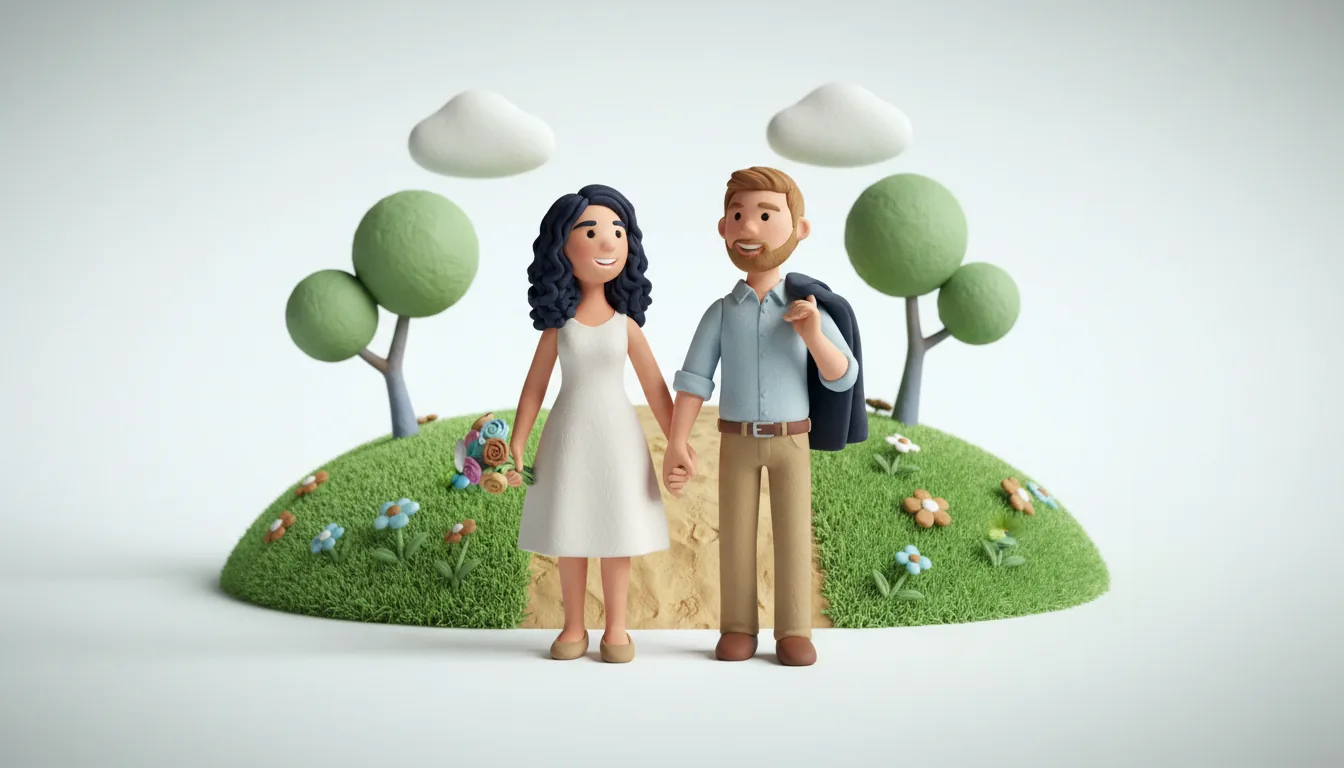
To elope is to get married in a very small, private ceremony, usually just the couple and a witness or two, instead of having a big wedding. The old meaning was running away in secret to marry. Many couples who elope now plan it openly, tell their families soon after and throw a party later.
An example: this message went to both family chats at 9:12 on a Saturday morning:
> We got married this morning on the hill above the old town. Just us, Ana and the celebrant. Party for everyone in June, details soon. Love, Lea and Sam
The ceremony had taken place two hours earlier, at seven, while the grass was still wet. Sam's sister Ana held the rings and signed as their witness. A celebrant they had met twice read the part the law asks for, and then Lea and Sam read their own vows from two folded cards. After that they walked down the hill hand in hand, toward breakfast. Lea held a bunch of wildflowers, and Sam carried his jacket over one shoulder.
Elope, then and now
The word came into English in the 1590s from the Anglo-French aloper, "to run away." At first it could also mean a married person running off with a lover. The picture from old novels is two people slipping away at night to marry without their parents' blessing.
Today's elopement keeps the small size and drops the secrecy. Nobody climbs out of a window. The couple picks a date, sorts the paperwork and chooses a place that means something to them, like the hill where they had their first picnic or the town hall around the corner.
Eloping or a wedding: what actually changes
The marriage itself is the same. You still need a marriage license and someone who is allowed to marry you, and some places also ask for one or two witnesses. The rules differ from one place to the next, so ask the office that issues licenses where you plan to marry.
What changes is everything around that:
- Guests. None, or a handful, instead of dozens.
- Planning time. A few weeks, instead of a year or more.
- The day. It's built around the two of you, with nobody to host and no seating plan.
- The party. It comes later, or never, and it doesn't have to be on the same day.
What you gain, and what you give up
Couples who elope often say the day felt like theirs. Nobody argued about who sits where, and shy people got to say their vows without a room watching. The planning fits into a few weekends.
The hard part is mostly about people. A parent may have pictured this day for years, and a best friend may feel left out. You also miss seeing everyone you love in one room, cheering for you. A party later brings part of that back, though it's different from being there when you said "I do." It helps to say out loud which of these things matter most to each of you.
When one of you wants the big day
This is a common snag. One partner has pictured a full dance floor for years. The other feels their throat tighten at the thought of 150 faces turned toward them.
Start by asking what each of you hopes to feel on the day. The format comes later. "I want everyone I love to see us" and "I want to say this without an audience" can both fit into one plan:
- Elope with one witness, then throw a big party a few weeks later.
- Hold a ceremony for ten people, and save the crowd for the dinner afterwards.
- Marry at the town hall with your parents there, then host everyone at home that evening.
Whatever you choose, both of you should be able to call it yours. If one partner simply gives in, it tends to come back at every anniversary. How to compromise in a relationship has more on meeting in the middle without one of you giving up the part you care about most. If you land on a full wedding after all, start with the first steps in how to plan a wedding.
How to plan an elopement
Most of the work sits in a few early choices. A short checklist:
- Agree on the why. Privacy, a dislike of crowds or wanting to marry soon each lead to a slightly different plan.
- Pick a date and a place. Choose somewhere that means something to you two, and check whether you need permission to hold a ceremony there.
- Sort the paperwork early. The license, the officiant and any witnesses take longer to arrange than people expect.
- Decide who comes. More on that below.
- Plan the hour after. A breakfast, a walk, a call to your parents. Without a party, the moment after the ceremony can feel strangely quiet.
- Ask someone to take photos. For many couples, a friend with a good camera is enough.
Who comes, if anyone
Some couples go alone and ask two people on the spot to be witnesses. Others bring a best friend or a sibling, like Ana on the hill.
Eloping with family is common too. A couple might bring both sets of parents and nobody else. Be careful with half steps. Once one parent is invited, the other parent, and soon a grandparent, will likely expect the same. Pick a clear line, like "parents only" or "just us," and give everyone the same answer. If the list keeps growing past a handful of people, a small wedding may fit you better.
Vows for an audience of one
Vows change when nobody else is listening. You don't have to explain inside jokes or speak up for the back row, and many couples find they write more plainly and say more. A few lines on a card is enough. If you're stuck on the first line, how to write wedding vows goes through the shape of a vow from the opening to the close.
Telling your families
The order matters more than the wording. Call parents and your closest friends before anything appears online, because hearing it from a post hurts more than the news itself.
A few weeks' notice gives a parent time to get used to the idea and to be glad for you on the day. Telling them afterwards spares you any pressure to change the plan. Either way, keep it short and warm: "We got married on Saturday. It was small and lovely, and we're planning a party so we can celebrate with you."
Some parents will be thrilled, and some will feel hurt for a while. Let them say so without arguing the choice all over again. A hurt parent usually wants to hear that they still matter, and an invitation to the party says it clearly. If in-laws keep bringing it up months later, boundaries with in-laws has calm ways to close the subject.
Elopement announcement wording
After the calls, a short announcement tells everyone else. A few ways to word it:
- "We got married! Just the two of us, on a hill at sunrise. Party coming in June."
- "Small news: we eloped. Bigger news: there will be cake for everyone this summer."
- "On Saturday we married each other with one witness and a lot of wildflowers. We can't wait to celebrate with you."
Telling people you're engaged works a little differently, and our engagement announcement guide has the order and the words.
The party afterwards
A party later gives friends and family the part they missed. It can be a garden lunch, a long dinner, or an afternoon in a park where everyone brings a dish. Show a few photos and tell the story of the morning. Many of the ideas for an engagement party work here too, since both are relaxed gatherings in a couple's honor. Years later, some couples hold a vow renewal with everyone there.
Leave a few weeks between the ceremony and the party so people can plan to come. If you'd rather have no party at all, say so kindly, and say it early.
Who dreams of the crowd, and who of the hilltop
Whether eloping sounds like a dream or a loss can depend partly on type. Seven of the sixteen types show the split clearly, listed here in the order of our types page.
Usually want the whole room
- Harmonizer wants the people they love around a good table, with food and warmth.
- Vitalizer wants the celebration, the music and every friend in one place.
- Mentor feels big moments deeply and wants them shared out loud, speeches included.
- Diplomat enjoys a room full of energy and loves being the one who brings everyone together.
Often happy with a hill and a witness
- Strategist dislikes fuss and crowds, and likes a plan that cuts out everything that isn't needed.
- Counselor keeps deep feelings private and may find it easier to say vows when nobody else is watching.
- Craftsman likes a practical plan, a beautiful place and a day without speeches.
If you two land in different groups, that's common, and it's one reason "elope now, party later" is such a popular plan.
See how you two make big decisions
Choosing between eloping and a big wedding is often the first large plan a couple makes together, and it shows how you decide things as a pair. Typeza describes the relationship type you two make, including where you pull the same way and where you tend to pull apart. The free couples compatibility test is where it starts, and your partner joins from your result.
Questions people ask
What does eloped mean?
"Eloped" is the past tense of elope. It means a couple married in a small, private ceremony instead of a big wedding. In older use, it meant they ran away in secret to marry.
Is eloping legally the same as getting married?
Yes. An elopement is a legal marriage when you meet the local rules, usually a marriage license and an officiant, plus witnesses where the law asks for them. Only the size of the event is different.
Is it selfish to elope?
No. It's a choice about your own wedding. It helps to tell the people closest to you kindly and to give them a way to celebrate with you afterwards.
Sources
- Dictionary.com, "elope". Today's senses, including a small ceremony with few or no guests, and the first record in 1590-1600.
- Wiktionary, "elope". Anglo-Norman aloper, "to run away," first seen in 1593, and the older sense of running off with a lover.
Written by Virko Kask, founder of Typeza
Written with the help of AI tools.
One question for two, every week
A question to ask your partner, friend or family, and how different types tend to answer it.
Free. Unsubscribe any time.