
What is a great aunt? The family word, and what she can be to you
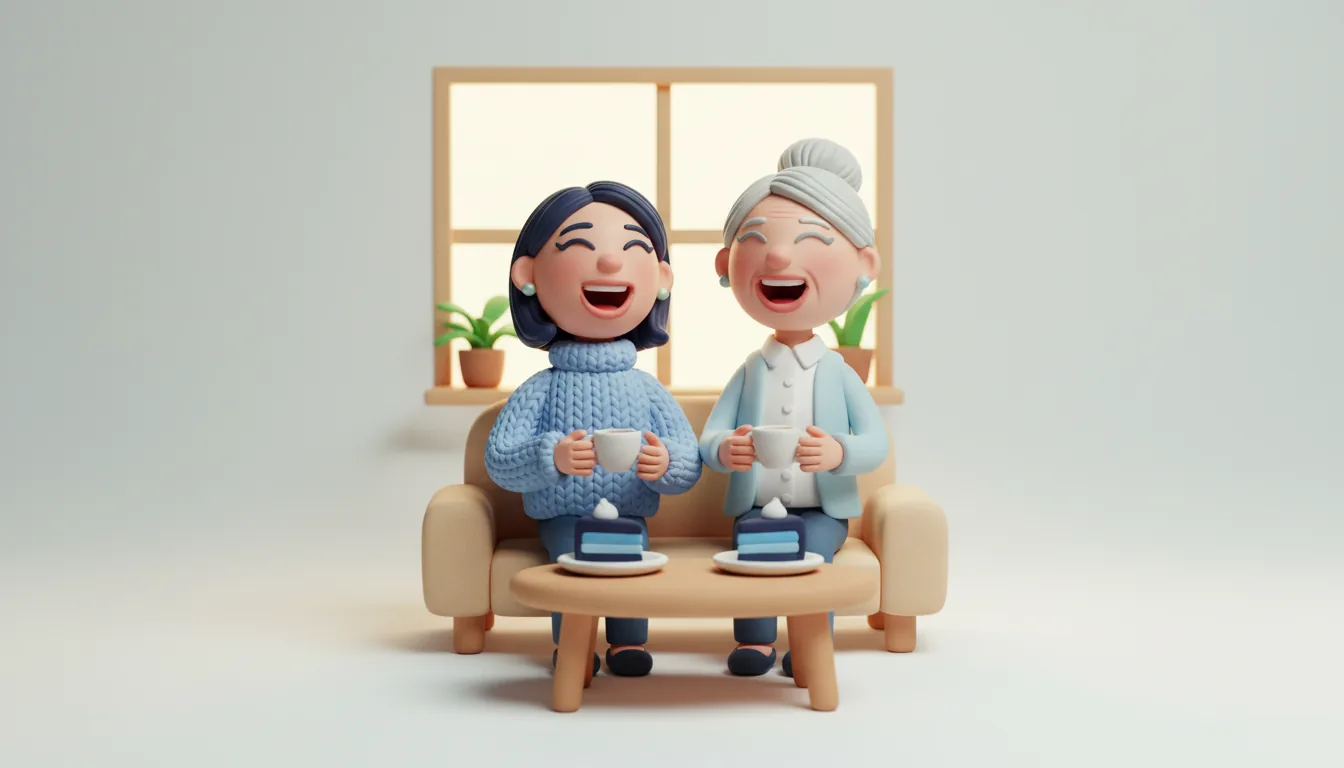
A great aunt is the sister of one of your grandparents. Seen from one generation up, she is your mother's or father's aunt. The word also covers the wife of your grandparent's brother, who is your great aunt by marriage. Some families say grand aunt instead, and both words name the same relative.
An example: at her grandmother's ninetieth birthday lunch, Hannah, who is 33, ended up on the sofa next to a tall woman with silver hair and a laugh that sounded oddly familiar. The laugh was her grandmother's. The woman was Margit, her grandmother's younger sister, who had moved to Portugal decades ago and whom Hannah knew mostly from Christmas cards signed "Aunt Margit." By the second slice of cake, the two of them were trading family stories and phone numbers. On the drive home Hannah asked her mother what Margit actually was to her. "Your great aunt," her mother said. "And my aunt."
Your grandmother's sister, your mother's aunt
The easiest way to place a great aunt is to start with your parent. Your parent's sister is your aunt. Your parent's aunt sits one generation higher, so she gets one extra word: great aunt. For Hannah, Margit is her grandmother's sister and her mother's aunt at the same time.
The same logic covers the men. Your grandparent's brother is your great uncle, and his wife is your great aunt by marriage. A great aunt who married into the family isn't related to you by blood, though plenty of families never bother with the difference.
There's a word for the other direction too. To Margit, Hannah is a grandniece, also called a great-niece. A man in Hannah's place would be a grandnephew or great-nephew.
How many great aunts you have depends on how many sisters your four grandparents had. Some people have none. Others, from big families, lose count somewhere around the second reunion.
Great aunt or grand aunt?
Both are correct, and they mean exactly the same thing. Great aunt is the older phrase, first recorded in the 1650s, and it's what most people say at the dinner table.
Grand aunt came along in the 1820s. It follows the pattern of grandmother and grandfather, which is why some people who build family trees prefer it. It also pairs neatly with grandniece and grandnephew. Dictionaries list both, and many people switch between them without noticing.
You'll also see great-aunt with a hyphen. That is only a spelling choice. If your family already has a habit, follow it. If not, great aunt is the version people understand right away.
What is a great-great aunt?
A great-great aunt is the sister of one of your great-grandparents. Put another way, she is your grandparent's aunt. Each generation you go back adds one more "great," so the sister of a great-great-grandparent is a great-great-great aunt. People who trace family history sometimes write great-grandaunt for the same woman.
Many people never meet a great-great aunt, because it takes a long-lived family for four generations to overlap as adults. When it does happen, she is often the one person who remembers the oldest family stories first hand.
Her children and grandchildren on the family tree
Once you know where your great aunt sits, her family is easy to place.
- Her children are your parent's first cousins, which makes them your first cousins once removed. So the answer to "what is my great aunt's daughter to me" is first cousin once removed, and the same goes for a son.
- Her grandchildren are your second cousins, because you share a set of great-grandparents. The guide to what is a second cousin walks through counting those links on a napkin.
- Her husband is your great uncle, by marriage if she is the blood relative, by blood if he is.
The side of the family matters for naming too. A great aunt on your mother's side is your maternal great aunt, and one on your father's side is your paternal great aunt, the same words used for paternal and maternal grandparents.
What to call her
What you call a great aunt is mostly family habit. A few common choices:
- Aunt plus her first name. "Aunt Margit" is a common choice at any age.
- Great Aunt plus her name. It's clear in writing, on a card or in a family tree, and a little formal out loud.
- Auntie. Warm, and usual in many families and regions.
- Her first name. Some great aunts prefer it, especially once everyone around the table is an adult.
- A family nickname. Plenty of great aunts go by something only the family understands. Our list of aunt and uncle names has more of these.
Other languages build the word the same way. In Spanish she is tía abuela, in French grand-tante and in Italian prozia.
If you're unsure, ask her. Some women love the title. Others say it makes them feel ancient and would rather just be Margit.
What a great aunt can be in a grown person's life
Once you're an adult, a great aunt can stop being a name on a card and become a real person in your life. She is family without being your parent, so she can be honest with you without a parent's worry, and you can be honest back.
She often knows the stories nobody else tells. She can describe your grandmother at thirty, explain an old family quarrel, or tell you which side of the family your temper comes from. When a grandparent dies, a great aunt can be the closest living link to them, with the same laugh or the same way of setting a table.
Some adults find a friend from another generation in her. Others find a calm voice that has watched the family go through the same arguments more than once. And as she gets older, the relationship can turn around, with the grandniece making the calls, the visits and the long drives. On her birthday, the lines for a grown niece writing to her aunt work for a great aunt as well. And when she's the one writing, the wishes for a grown niece or nephew fit a great-niece or great-nephew too.
Why one great aunt feels close and another a stranger
Distance and history decide a lot. A great aunt who lived nearby and came to every holiday feels like family. One who lived abroad can feel like a polite stranger, at least until a long lunch changes that.
How close she was to your grandparent matters too. Sisters who talked every week pull their families together. Sisters who fell out decades ago often leave their grandchildren knowing very little about each other.
Then there's plain personality. Some great aunts and grandnieces click within an hour, while two relatives with the same history never quite find a way in. Here is how six Typeza types often fill the great aunt role, in the order of the types page:
- Harmonizer keeps an open kitchen, remembers your favorite dish and makes a visit feel like coming home.
- Mentor tells the old family stories with real drama and wants to hear what you hope for in your own life.
- Inspector keeps the dates, the papers and the family tree in order, and corrects anyone who gets a birth year wrong.
- Dreamer says little in a crowd, then hands you an old photo with a story nobody else remembered.
- Guardian is fiercely loyal to the family and tells you plainly what she thinks of your choices, because she cares how they turn out.
- Craftsman shows love by doing. She fixes a drawer, teaches you her bread and sends you home with jars from her garden.
A great aunt can be close to one sibling and distant from another for the same reason. She didn't love one of them more. She just fits one of them more easily.
Find out why some great aunts feel so close
An hour with a great aunt can feel easier than a dinner with a parent, and the two types involved often explain why. Relatives of any generation, great aunts included, are welcome on the free family compatibility test. Send your great aunt the link from your result. When she has done hers, your relationship type with her shows what flows easily across the generations and where one of you might get the other wrong.
Questions people ask
What is a great aunt to me?
She is the sister of one of your grandparents, or the wife of a grandparent's brother. You are her grandniece or grandnephew, also called great-niece or great-nephew.
Is a great aunt the same as a grand aunt?
Yes. Both words name your grandparent's sister. Great aunt is the older word, and grand aunt follows the pattern of grandmother.
What is my grandma's sister to me?
Your great aunt. Your grandma's brother is your great uncle, and their children are your first cousins once removed.
What is my great aunt's daughter to me?
Your first cousin once removed. She is your parent's first cousin, one generation above you.
Is a great aunt a blood relative?
If she is your grandparent's sister, yes. If she married your grandparent's brother, she is family by marriage and not by blood.
What is a half great aunt?
She is a half sister of one of your grandparents, so the two of them share one parent instead of two. Most families still just call her great aunt or Aunt plus her first name.
Sources
- Dictionary.com, "great-aunt". The sister of a grandparent, first recorded in 1650 to 1660.
- Dictionary.com, "grandaunt". The same relative, first recorded in 1820 to 1830.
- Wiktionary, "great-aunt". A grandparent's sister or sister-in-law, and the Spanish, French and Italian words.
Written by Virko Kask, founder of Typeza
Written with the help of AI tools.
One question for two, every week
A question to ask your partner, friend or family, and how different types tend to answer it.
Free. Unsubscribe any time.