
What does chivalrous mean? Modern chivalry, and whether it's dead
Chivalrous means behaving with courtesy and care toward others, especially a partner, and wanting to keep them safe and comfortable. It is a compliment you still hear, usually about someone who walks a date to the door or gives up their coat on a cold night.
It's said SHIV-ul-rus, with a soft "sh" at the start, because the word came into English from French. It's spelled with an "a" after the "v," which trips many people up. The adverb is chivalrously and the noun is chivalry. Words close to it are gallant, gracious, considerate and gentlemanly, while the opposite is rude, thoughtless or boorish.
The knights behind the word
Chivalry comes from the Old French chevalerie, built on chevalier, a horseman or knight, and further back on the Latin for horse. In the Middle Ages, it first meant mounted soldiers, the knights themselves. Later it meant the code they were supposed to live by, which asked for bravery, loyalty and looking after people weaker than yourself. The armor is long gone, and today the word describes small, everyday courtesy.
What chivalry looks like now
Modern chivalry is mostly quiet. It's in what someone does without being asked:
- Holding a door and waiting the extra second for the person behind.
- Offering a jacket or coat when the other is shivering.
- Walking someone home, or waiting until they're inside before driving off.
- Making sure the other is comfortable, with the better seat, the warmer side of the table or a hand with a heavy bag.
- Speaking up for someone who's being talked over or teased too hard.
- Keeping your word, including small promises like calling when you said you would.
A chivalrous man was once the usual phrase, and people still use it to describe a man who is courteous and protective toward his partner. The habits themselves belong to anyone.
An example: a scarf on the walk home
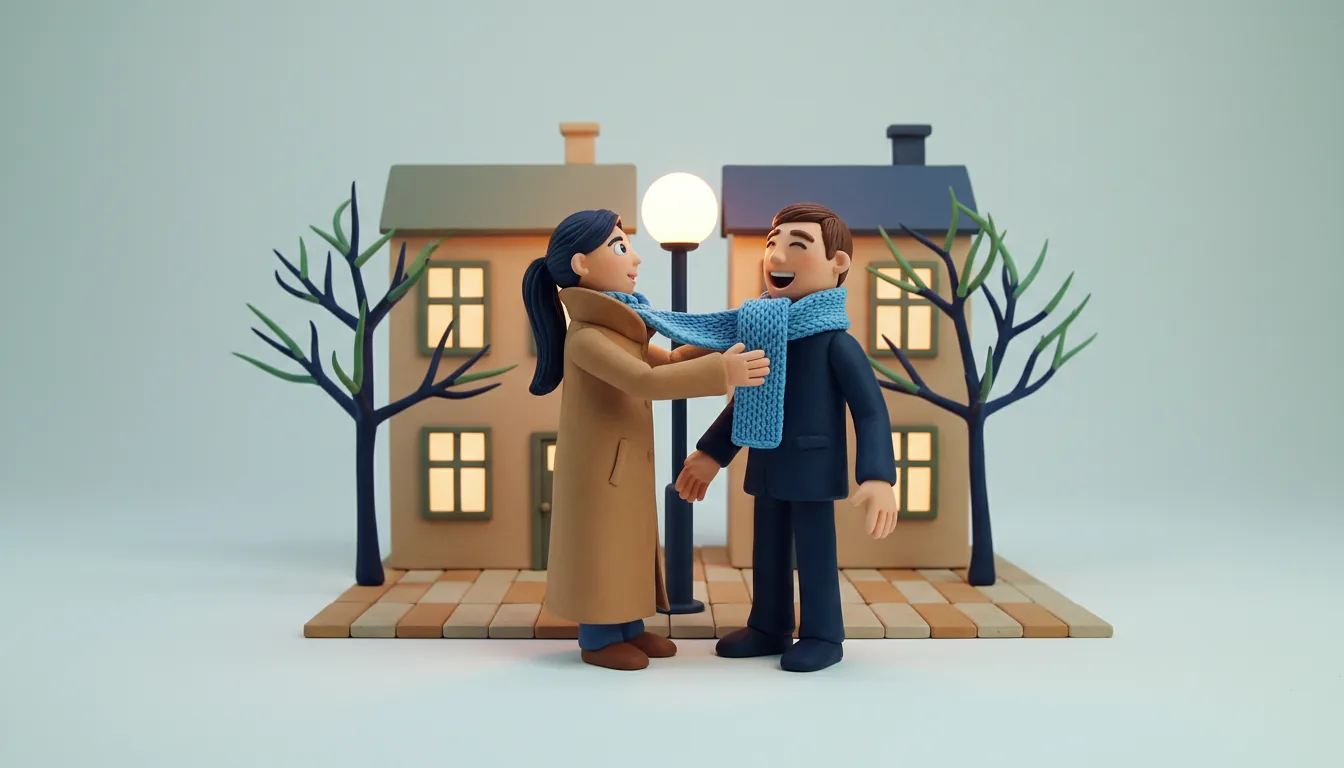
Selin, 31, and Owen, 32, were walking home from a friend's birthday dinner on a cold November evening. Halfway down their street, Selin noticed Owen had his shoulders up around his ears. He'd left his scarf on the friend's sofa.
She stopped under a streetlamp, unwound her sky-blue scarf and wrapped it twice around his neck. "You'll need it more than me, I've got a high collar," she said. Owen laughed and tried to give it back. She tucked the ends into his jacket and walked on.
The next week, it was his turn. Selin had an early train, and Owen walked her to the station in the dark and waited on the platform until it pulled out, even though it meant an extra half hour before work. Neither of them would call it chivalry. They'd call it looking out for each other, which is what the word has come to mean.
Is chivalry dead?
People say "chivalry is dead" when a door swings shut in their face, or as a half-joke when nobody offers a seat. The phrase means that old-fashioned courtesy has gone, and that people no longer look out for each other in small ways.
The forms have changed more than the care behind them. There are fewer fixed rules now about who does what for whom. A man may not be expected to stand when someone enters a room, and few people expect it. But many people still notice and value it when a partner thinks of their comfort first. So chivalry is still around, though now it comes from choice more than from rules.
In a long relationship, it can be one of the first things to slip. Early on, people hold doors and walk each other home without a thought. A few years in, the same small acts take more effort, and they matter just as much. A quick text to check the other got home safe keeps it going.
Chivalrous, kind or just polite?
Polite means following good manners, like saying thank you and not interrupting. Kind goes deeper and is about caring how someone feels, which our piece on kind vs nice explores in more detail. Chivalrous adds a protective streak to good manners. It often means giving something up for the other person, like your coat, your seat or your time. Courtesy like this is one small part of what makes a good person, and it says a lot about how someone treats people when it isn't easy.
Anyone can be chivalrous
Chivalry has an old link with knights and with men, but anyone can be chivalrous, whatever their gender. Selin's scarf was chivalrous. So is a woman who walks her friend to the car after dark, a man who lets his partner have the last slice, or a grown son who drives across town to fix his mother's porch light.
People often list it among the qualities of a good man, and it's worth looking for in anyone you're close to. Small acts of care are also one of the ways people show affection, even those who rarely say how they feel.
Care you can see and care you can hear
Personality type can shape how someone shows this kind of care. The Mentor often shows it through words and attention, asking how your day really went and remembering what worried you last week. The Organizer tends to show it in practical help, like sorting out the tickets and having a plan if it rains. The Encourager usually cares through warm talk and interest, the partner who's curious about everything you're into. The Craftsman often shows it through small comforts, like a blanket on your knees before you've noticed you're cold.
So one partner may feel cared for by a kind word, and another by a fixed tap. Type theory sketches typical patterns, and a real couple can mix them freely. None of this is meant to tell anyone how to behave.
Chivalry that doesn't talk down
Chivalry goes wrong when it treats the other person as helpless. Taking the bag out of someone's hands, insisting on walking them home after they've said no, or explaining things they already know can feel patronizing, even when it's meant well.
A few habits keep it warm and respectful:
- Offer, don't insist. "Want my jacket?" leaves the choice with them.
- Take a no gracefully, without a sigh or a second try.
- Let it go both ways. Accept a held door or a scarf as easily as you give one.
- Notice what the person actually needs, instead of following a script.
Who picks up the bill on a date is its own small question. Offering is kind, as long as nobody is made to feel stingy for wanting to split it.
How you two look after each other
Typeza shows how two partners' types meet, including whether each of you tends to show care in deeds or in words, and it names the relationship type between you. The free compatibility test is the first step for both of you.
Questions people ask
What is a chivalrous man?
A chivalrous man is polite and looks out for the people he's with, especially a partner. He holds doors, walks someone home and makes sure the people with him are comfortable.
How do you use chivalrous in a sentence?
"It was chivalrous of him to give up his seat for the woman with the heavy suitcase." You can also use the adverb: "She chivalrously offered him her umbrella."
What does "chivalry is dead" mean?
It means people no longer show the old-fashioned courtesy they used to, like holding doors or offering a coat. It's often said as a complaint or as a joke.
Why do people say chivalry is dead?
Mostly because the old rules about who does what have faded, and some people miss them. Many small courtesies are still common, just less tied to fixed roles.
What is the opposite of chivalrous?
Common opposites are rude, discourteous, inconsiderate and boorish. They describe someone who doesn't think about other people's comfort.
What are some synonyms for chivalry?
Courtesy, gallantry, gentlemanliness and good manners are close. Gallantry is the nearest in feel, and it sounds just as old-fashioned.
What does chivalrous mean in a relationship?
It means looking after your partner's comfort in small, steady ways. You notice when they're cold or tired, keep your promises and make room for them without being asked.
Is chivalrous a compliment?
Yes. Calling someone chivalrous praises their manners and their care for others. It can sound a little old-fashioned, which many people find charming.
How do you pronounce chivalrous?
It's SHIV-ul-rus, with the stress on the first part and a "sh" sound at the start, not a "ch" as in "chair."
Sources
- Wiktionary, "chivalry": from Old French chevalerie, from Latin caballus, "horse"; the older senses of mounted soldiers and the knightly code.
- Wiktionary, "chivalrous": the pronunciation with "sh", and "ch" as the archaic one.
Written by Virko Kask, founder of Typeza
Written with the help of AI tools.
One question for two, every week
A question to ask your partner, friend or family, and how different types tend to answer it.
Free. Unsubscribe any time.