
How to deal with jealousy, with your partner and with friends
Jealousy is the fear of losing your place with someone, to another person, a group or a new part of their life. The way to deal with it is simple to describe and harder to do: notice it, say it out loud without blame, and ask for one small thing that would help. It shows up with partners and with friends, and different people feel it and show it in very different ways.
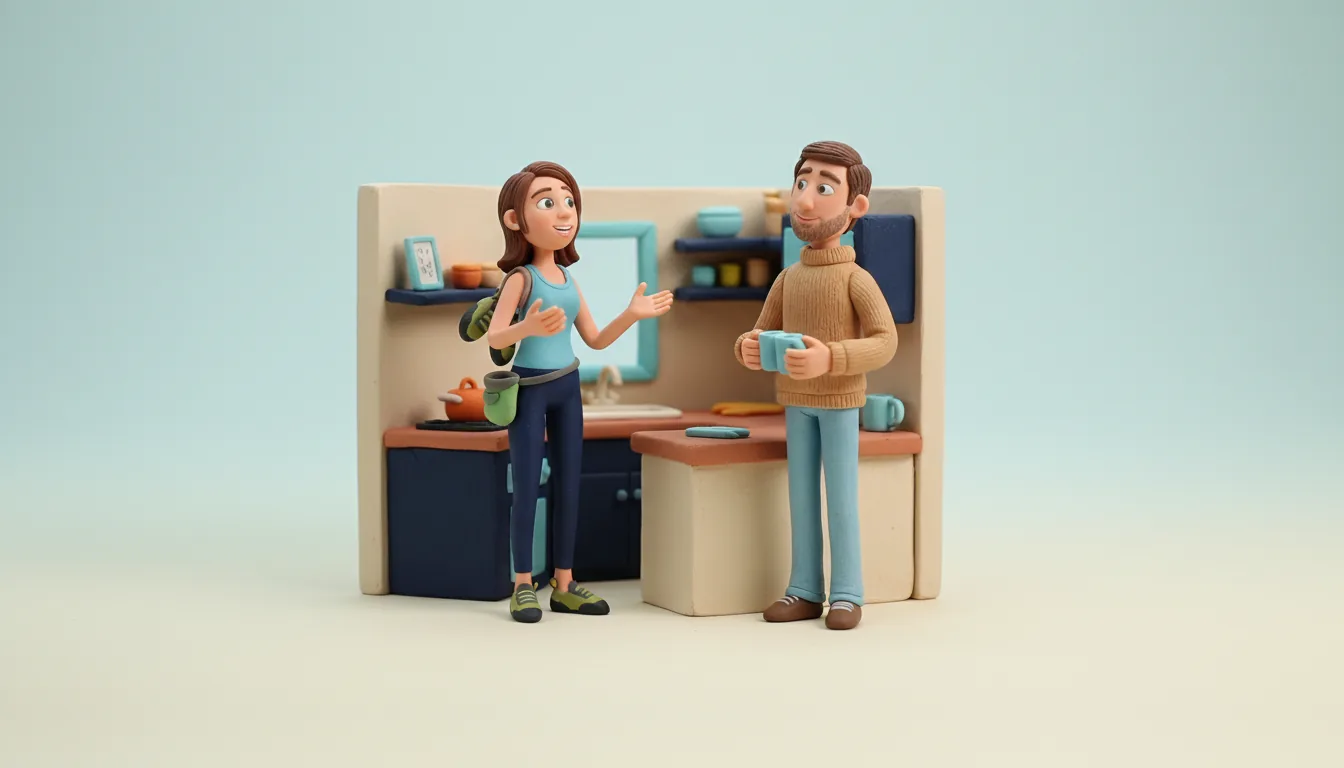
An example: Ana took up climbing in the spring. By June she went three evenings a week and came home glowing, full of stories about Mia, who could hang from one hand, and Jonah, who set the routes. Leo was glad for her. He was also, to his own surprise, jealous. He felt a small twist every time she said "the climbing crew," and he started answering her stories with "Mm" and going to bed early. It took him three weeks to say what was wrong, and once he did, it took ten minutes to sort out.
Why jealousy shows up when nothing is wrong
A lot of jealousy starts with a change, and often there is no rival at all. Someone you love finds a new interest, a new friend or a new job, and some of the time and attention that used to come to you goes somewhere else for a while. A part of you notices the gap and fills it with worry.
It can also come from comparison. You see how easily your partner laughs with someone else, or how your best friend lights up around her new colleagues, and a small voice asks if you still matter as much. The feeling gets louder when you're tired, stressed or already unsure about yourself. If what you want is something they have, like a talent or an easy way with people, that is closer to envy, and green with envy covers it between friends and siblings.
Seen that way, jealousy tells you something useful. It points to what you value and what you're afraid of losing. For Leo, it was the evenings that used to be theirs.
How different types feel jealousy and show it
Part of why one person says "I'm jealous" out loud while another goes silent for a week is personality type. Here are eight of the 16 types:
- Vitalizer feels it fast and says it fast, sometimes louder than they mean to. By the next morning it's often over.
- Mentor feels it deeply and wants to talk about the feeling, sometimes for longer than the other person can manage.
- Inspector goes quiet and keeps careful note of what changed. They may only speak up once they're sure their point is fair.
- Commander can turn jealousy into competition or irritation. Being annoyed is easier for them than admitting they feel left out.
- Dreamer pulls back and pictures how things might go wrong, often without saying a word.
- Guardian puts loyalty near the top of everything. When a partner or friend spends a lot of time with new people, it can sting more than they expect.
- Counselor hides it to keep the peace and smiles through the evening, then feels hurt that nobody noticed.
- Encourager likes to be the one who lifts others up, so they can feel jealous when someone else becomes the person their friend turns to.
None of these ways is wrong. Knowing which one is yours, and which one the other person has, makes the talk much easier.
How to tell your partner you feel jealous
Pick a calm moment, ideally not the minute they walk in the door. Then keep it short and about you.
- Start with how you feel, as in "I've been feeling a bit jealous, and I feel silly about it."
- Then name what sets it off, like "It's when you talk about the climbing crew."
- Say what you're afraid of. "I think I miss our evenings, and I'm worried you'd rather be there."
- Finish by asking for one small thing, such as "Could we keep Thursday nights for us?"
Leave out blame, and leave out questions that sound like a test, such as "Do you like them more than me?" Those make the other person defend themselves, and then nobody talks about the real worry.
Ana's answer surprised him. She had noticed he was quieter and thought her stories bored him. She kept Thursdays free and asked him to come along one Sunday.
When the jealous feeling is about a friend
Jealousy between friends happens too, and it can be harder to bring up. Your best friend gets a new partner and has half the time she used to. A friend moves away and starts posting photos with people you've never met. Or, like Ana's oldest friend Priya, you watch someone you love disappear into a new group.
Priya didn't say anything for a while either. Then she sent Ana a text: "I miss you. Coffee this week?" That was enough. They now meet every second Saturday, and Ana no longer assumes Priya will always be there without a plan.
If a friend seems to resent something you have, dealing with a jealous friend looks at that side more closely.
What helps if you're the jealous one
- Notice the feeling early, while it is still small. Tight shoulders and short answers are often the first sign.
- Ask yourself what exactly you're afraid of losing. Time, attention and closeness each have a different fix.
- Hold on to what you know for sure, and keep it apart from what you fear might be true.
- Keep your own life full, with your own friends, plans and things to look forward to.
- Say it sooner. Three weeks of silence made Leo's ten minute talk much harder to start.
- Be kind to yourself. Feeling jealous doesn't make you a bad partner or a bad friend.
If the fear started in an old relationship, it may be emotional baggage more than anything your partner did.
What helps if someone you love is jealous
Being on the other side is hard too. You may feel blamed for something that makes you happy.
- Listen first, and don't laugh it off. "That's silly" only sends the feeling underground.
- Give specific comfort. "I love my climbing nights, and I love coming home to you" says more than "Don't be jealous."
- Bring them in now and then. Introduce your new friends, or share a piece of the new thing.
- Keep one small ritual that nobody else is part of.
- Don't give up what you love to make the feeling go away. That can turn into resentment later.
Sometimes jealousy is really about how much closeness each person needs. If one of you wants more time together almost all the time, being clingy in a relationship covers that side.
The Sunday Leo went climbing
Leo came home from his first climbing session sore and laughing, and wondered out loud why Ana could throw herself into a room full of strangers while he needed weeks.
See why new people feel easy to one of you
One partner walks into a room of strangers with ease while the other needs weeks, and when nobody names that gap, it can feed jealousy. Type explains a lot of it, and you can find yours on the free couples compatibility test. Your result has a link for your partner too. With both answers in, your relationship type covers how partners like you usually get on and where you tend to rub.
Questions people ask
How do you deal with jealousy?
Notice it early, work out what you're afraid of losing, and tell the other person calmly, with one small request.
Why am I so jealous?
Often because something changed, you feel unsure of yourself, or someone you love is giving time and attention to something new.
How do you stop being jealous in a relationship?
The feeling may not vanish for good, but you can talk about it sooner, keep your own life full and agree on time that belongs to the two of you.
Is it normal to be jealous of your partner's friends?
Yes, especially when the friendships are new. It often eases once you meet them and still have your own time together.
How do I tell my partner I'm jealous?
Pick a calm moment, start with "I've been feeling jealous," say what sets it off and ask for one small thing.
How do I stop being jealous of my friend's new partner?
Tell your friend you miss them, suggest a regular plan, and give the new partner a fair chance.
Written by Virko Kask, founder of Typeza
Written with the help of AI tools.
One question for two, every week
A question to ask your partner, friend or family, and how different types tend to answer it.
Free. Unsubscribe any time.