
Jealous friend: how to tell if someone is jealous of you, and why it happens
You can tell someone is jealous of you when your good news gets a flat reply, your success turns into small digs, and a friend who used to cheer for you goes quiet or starts to compete. One cold reply proves nothing, but a pattern does. Below are the signs and the reasons, including why a friend so often envies the one thing that comes easily to you.
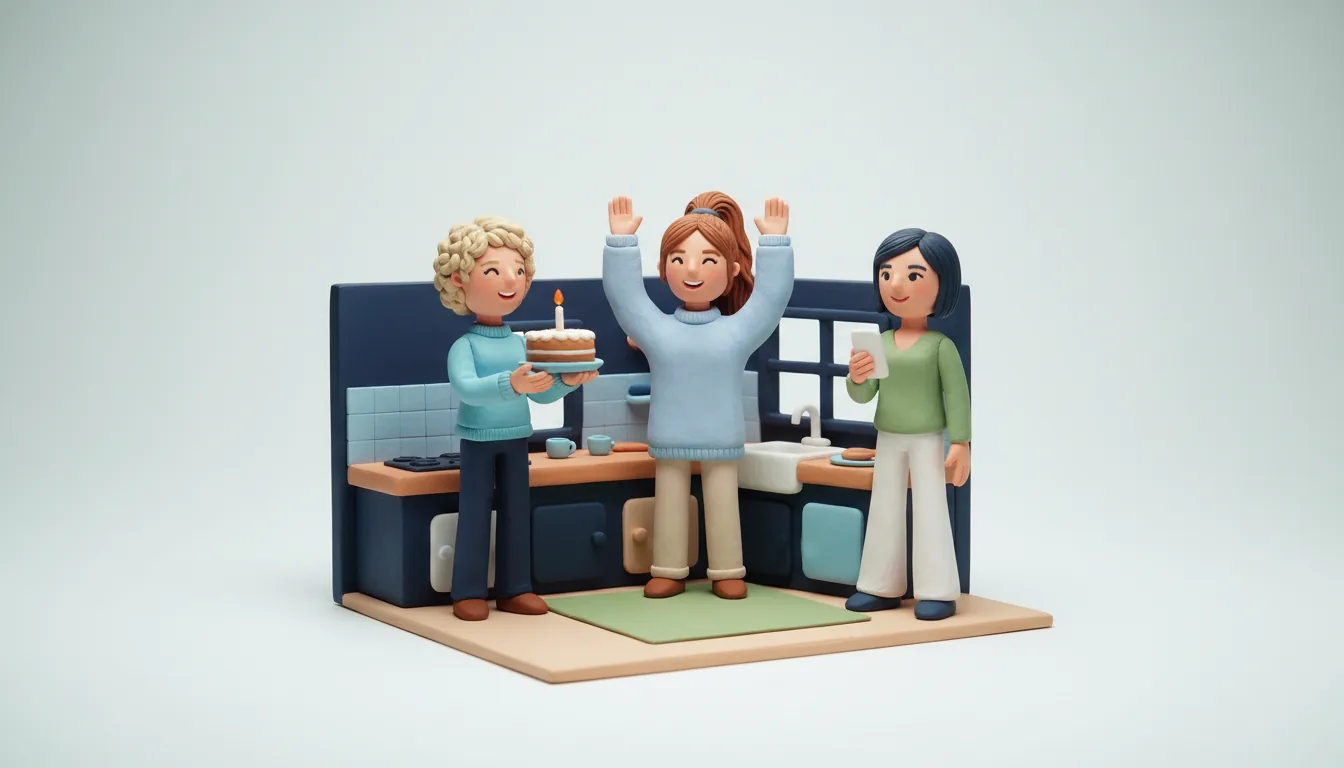
An example: you get the job you worked toward for two years, and you tell your two oldest friends the same evening. One calls back within a minute, shouting, and wants every detail. The other writes "wow, good for you" and asks if you have seen the flat she might rent. A week later, in the group chat, she jokes that you will soon be too important to answer messages.
What is a jealous friend?
A jealous friend is a friend who feels hurt or threatened by something in your life. Usually it is your success, your looks, your partner or your other friends. The feeling is normal. What matters is what the friend does with it. Some say "I'm a bit jealous, well done", and the feeling passes. Others hide it, and it leaks out as coldness, sharp jokes or quiet competition.
A jealous friend is not always a bad person. They may like you and compare themselves with you at the same time, which is why the signs can be confusing. Some people call a friend like this a frenemy.
How can you tell if someone is jealous of you?
People rarely say they are jealous, so you read it from small things. The same signs show up with colleagues and relatives.
- They go quiet or change the subject when you share good news.
- They praise you in a way that stings, like "Must be nice to have that kind of luck."
- They play down your success and say anyone could get that job right now.
- They copy what you do and then act as if it was their idea.
- They compete. When you mention a trip, they mention a bigger one.
- They seem happier when things go wrong for you than when they go right.
Any of these can have another cause, such as a hard week. Look for the same reaction to the same kind of news, again and again.
What are the signs of a jealous friend?
In a friendship there are a few extra signs.
- They were close when you were struggling and pulled back when your life got better.
- They are cool toward your new partner or your new friends.
- They forget your big day, even after you told them about it.
- They keep score of who paid, who called first and who got invited.
- You start to hold back good news, because you already know how it will land.
The last sign is the one to watch. If you make your life sound smaller around a friend, the jealousy is already shaping the friendship.
What is the difference between jealousy and envy?
The two words get used as if they were the same, yet they mean different things.
Envy is wanting what someone else has. Your friend envies your new job, for example. English even gives it a color, and green with envy goes into where that comes from.
Jealousy is the fear of losing someone to a third person. Your friend is jealous when you spend more time with a new friend or a new partner, because they fear losing their place in your life.
So "my friend is jealous of my promotion" is, strictly speaking, envy. "My friend is jealous of my new best friend" is jealousy. Envy comes from comparison, and jealousy comes from fear of losing closeness.
Why do friends get jealous?
Friends are usually close in age, background and stage of life, so they are the easiest people to compare yourself with. A stranger's promotion means nothing. A friend's promotion asks a quiet question: why not me?
A few things make it more likely:
- A change in life stage. One friend gets engaged, buys a home or has a baby, and the other feels left behind.
- A hard time. A friend who has just lost a job or a partner finds your good news harder to hear.
- Fear of being replaced. A new partner or a new circle can make an old friend feel less needed, like a third wheel.
- Old roles. If you were always the one who struggled, your success can unsettle a friend who was used to being the strong one.
One more cause comes from the two personalities. It explains why a friend can be generous about most things and sore about one.
Why does a friend envy what comes easily to you?
Socionics, the framework behind Typeza, names 16 personality types. Each type is strong in some areas without trying and unsure in others. Any two friends fall into one of 16 relationship types. In some of them, one person's easy strength lands on the other person's sore spot. That is where envy grows.
Go back to the new job. Say you are an Entrepreneur: driven, practical and quick to turn a plan into a result.
The friend who cheered: Duality
The friend who called back at once is a Guardian. The two of you are in Duality. Your drive covers something she finds hard, and her loyalty and steady values give you the footing you lack. Your success presses on no sore spot in her, so she can simply be glad. That is part of why Duality suits close friends and partners best: each person's strength arrives as a gift.
The friend who changed the subject: Super-ego
The friend who wrote "wow, good for you" is a Vitalizer. She brings warmth into every room and makes people feel at home. With you she is in Super-ego. From a distance you admire each other. She admires your drive, and you admire how easily people love her. Up close, your easy strength lands where she feels pressure to do well and is unsure of herself, and hers does the same to you. Your new job reminds her of something she feels she should be good at. Her full house at every party can sting you in the same way.
This does not make her a jealous person. With other friends she may be the first to celebrate. The sting belongs to this pair.
The friend who feels small next to you: Supervision
Sometimes envy runs one way. In Supervision, the natural strength of the Supervisor is exactly what the Supervisee finds hardest. Take a Diplomat and a Counselor. The Diplomat asks for a raise, talks her way into a full restaurant and gets the best table, all without effort. The Counselor finds standing up for herself the hardest thing there is. She may watch her friend with a mix of awe and quiet hurt, while the Diplomat has no idea that anything is wrong.
The friend who wants more of you
Jealousy about your other friends has a pair pattern too. In an Order relationship, the Supplier wants to be closer than the Orderer does, so the Supplier is the one who feels left out when the Orderer makes a new friend. Types of friends covers more patterns like these.
How to deal with a jealous friend
- Name it gently and in private. "You went quiet when I told you about the job. Is everything ok?" gives your friend a way in without blame.
- Do not shrink your life to keep the peace. Share good news plainly, without bragging and without saying sorry for it.
- Ask about their life, and listen to the answer. Envy grows when one person's news fills every talk, and it shrinks when you keep a friend close enough to know their worries too.
- Notice what they envy. If it is always the same area, the pattern may come from the pair more than from your friend.
- Find the right distance. Super-ego and Supervision friendships often go better in a group or in shorter meetings.
Betrayal in friendship: when jealousy goes too far
Jealousy often stays a feeling. Sometimes it turns into betrayal. A friend shares your secret, runs you down to others or quietly works against you. Being betrayed in a friendship can hurt more than a breakup, because it comes from someone you trusted with the things you hide from everyone else.
Jealousy is often the root. A friend who envies your life may never plan to hurt you. The small digs grow, and one day they tell your secret to look important or to bring you down a step.
A relationship type can explain a sting, like a remark that lands hard. It cannot explain betrayal. In a tense pair the remark is made to your face, and the friend often has no idea how it landed. Betrayal happens behind your back, and the friend knows it. Take your time before you decide whether the friendship can go on.
What if you are the jealous friend?
It happens to everyone. If one friend's news always stings in the same area, that may simply be where their easy strength meets your sore spot. Knowing this often takes the heat out of the feeling. Then say something kind and true: "I'm a little jealous, and I'm really happy for you." If the same feeling shows up with a partner too, how to deal with jealousy covers both sides.
How to see where the envy comes from
From the outside, nobody can tell whether two friends are in Duality or in a pattern where envy grows. Try the free friendship compatibility test and send your friend the invite link from the result. When she has finished it too, you both see your relationship type, how your strengths support each other and where one of you might feel small beside the other.
Questions people ask
What are the signs of a jealous friend?
A jealous friend pulls back when your life gets better, is cool toward your new partner or friends, keeps score and makes small digs about your success. A clear sign is that you start to hold back good news around them.
What is the difference between jealousy and envy?
Envy is wanting what someone else has. Jealousy is the fear of losing someone you care about to another person. A friend who resents your promotion feels envy. A friend who resents your new best friend feels jealousy.
Why would a friend be jealous of me?
Friends are the easiest people to compare yourself with. In some relationship types, one friend's easy strength also lands on the other's sore spot, which makes envy more likely.
Sources
- Wikipedia, "Jealousy". Jealousy as the fear of losing a valued relationship to a rival, and envy as wanting what you lack.
- Dictionary.com, "'Jealousy' vs. 'Envy': Can You Feel the Difference?". The two words are often used for each other, and wanting what someone has is usually called envy.
Written by Virko Kask, founder of Typeza
Written with the help of AI tools.
One question for two, every week
A question to ask your partner, friend or family, and how different types tend to answer it.
Free. Unsubscribe any time.