
Middle child: middle child theory, traits, and middle children as adults
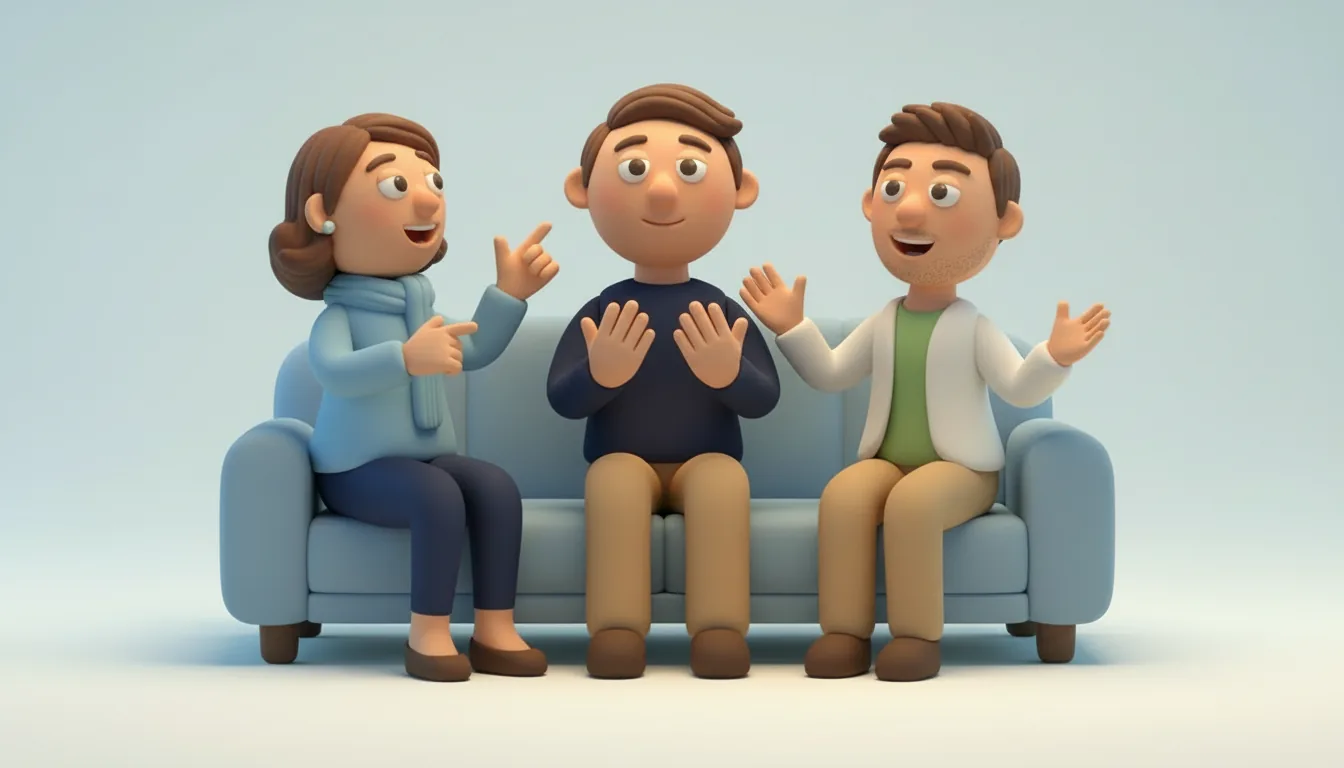
Middle child theory is the idea that a child born between an older and a younger sibling grows up with a personality of their own: easygoing, a peacemaker, independent and a little overlooked.
An example: at his mother's seventieth birthday, Dan's older sister gave the speech. His younger brother made everyone cry with a slideshow of old photos. Dan set up the chairs, fixed the speaker that kept cutting out and quietly moved two aunts who were not speaking to each other to opposite ends of the table. Nobody noticed until his niece said at the end, "Uncle Dan, you did everything." He laughed and said, "Middle child."
What is middle child theory?
The theory starts from the middle child's place in the family. The oldest had the parents to themselves for a while and gets the first of everything. The youngest is the baby, the last one to be looked after. The middle child has neither of these places. They arrive in a family that already has a leader, and soon a new baby takes the attention.
From that, the theory says, a middle child learns to find their own way. They negotiate between the other two, look for attention outside the family and build close friendships. The idea is one part of birth order theory, which gives every place in the family its own set of traits. Large studies give it little support. A 2015 study of about 20,000 adults in the US, Britain and Germany found no birth order effect on traits such as how outgoing or how agreeable people were.
Middle child traits
These are the traits often linked to middle children:
- Peacemaker. Used to standing between an older and a younger sibling, they calm fights and see both sides.
- Flexible. They learned early that the family plan was rarely built around them, so they adapt easily.
- Independent. With the parents busy with the oldest and the baby, they got on with things alone.
- Loyal to friends. Many build a second family of close friends.
- Good at bargaining. Years of trading toys and turns with both sides make a good negotiator.
- A bit rebellious. Some stand out by doing the opposite of what the older sibling did.
- Easy to overlook. The famous complaint: fewer baby photos, hand-me-down clothes, a birthday that got squeezed between other plans.
They are a picture, and real middle children match some parts of it and miss others.
What is middle child syndrome?
Middle child syndrome is slang for the feeling of being left out or overlooked by your family because you were born in the middle. It is no diagnosis. People use it to say "nobody noticed me" with a shrug and a smile.
They say it about the second of three children who never had the spotlight, or about a grown sibling who feels the family only calls when it needs a favor. As with only child syndrome, the syndrome part is a joke.
Middle child stereotypes, and why people joke about them
The internet loves middle child jokes. The middle child is the one missing from the family photo, the one who got the older sibling's old bike, the one who "raised themselves". People even search why the middle child is always hated. Most middle children are loved just as much as their siblings. The jokes stick because they are easy to recognize: in a family of three children, the middle place is the hardest one to name.
There is something real under the jokes. In busy families, the middle child can get a little less attention, simply because the oldest has the firsts and the youngest has the needs. Many middle children say it gave them something in return, like independence and a knack for getting along with almost anyone.
When a family has more than one middle child
In a family of four or five children, there are two or three middle children, and the picture gets blurry. The second child may act like an oldest to the little ones. The fourth may feel like the youngest until the baby arrives. Age gaps matter too. A child born six years after the others can grow up almost like an only child, even with three siblings. Families change over time as well, so each child in the middle gets a slightly different home.
Middle children as adults
A role learned at eight can last into the forties. When people talk about middle child syndrome in adults, they usually mean this: the feeling of being taken for granted by the family long after childhood ended. Many adult middle children notice the old patterns at family gatherings.
- The family go-between. They still pass messages between a parent and a sibling, or calm a tense dinner.
- The one who rarely asks. Used to not being the focus, they find it hard to ask the family for help.
- Friends as family. Many middle children are close to friends in a way they never were with their siblings.
- Easy in a couple. Years of compromise can make them easy to live with, and also slow to say what they want.
If you are a middle child and the old role feels heavy, you can change your part in it. Tell a sibling directly what you need instead of hoping they notice. Skip the role of messenger once, and see what happens. Spend time one to one with each sibling, away from the family table, where the old ranks matter less. And if your brother or sister is the middle one, National Middle Child Day on August 12 is a good excuse to take one of those jobs off their hands.
Why not every middle child fits the picture
Birth order hands out roles. Personality is another matter. A middle child can have any of the 16 personality types in Typeza, and the type shapes how they live the middle role. Here are four grown-up middle children:
- Ideator: the family rebel, always questioning the rules the oldest followed. Independent, yes, and far too loud to be the quiet peacemaker.
- Mentor: dramatic and impossible to overlook. They took the spotlight the theory says middle children never get.
- Guardian: fiercely loyal to both siblings, still stands up for the youngest and remembers every unfair moment at the family table.
- Craftsman: quiet and self-reliant, happiest fixing a bike in the garage. They fit the independent part of the picture and care little about the attention part.
Two middle children in different families can be nothing alike. Even siblings in the same family can each be any type, which is why a middle child sometimes feels close to one sibling and far from the other. Types of sibling relationships shows how that works between brothers and sisters, and black sheep of the family covers the family member who fits nobody's picture.
Find out where you fit with your brothers and sisters
Dan's sister gave the speech and his brother made the slideshow, and none of that tells you their types. Your place in the family says little about personality, while the test asks about you directly. Begin on the family compatibility test page with the free test, and share the link on your result with a brother, a sister or a parent. They need to be 16 or older, as everyone on Typeza does. When a sibling finishes, you see both of your types and the relationship type between you, none of which a speech or a slideshow could show. Your own type shows at the end of the test, before you make any account.
Questions people ask
What is middle child theory?
The idea that a child born between an older and a younger sibling becomes a flexible, independent peacemaker who sometimes feels overlooked. Large studies of birth order have not found these effects on personality.
What are middle child traits?
Middle children are often described as peacemakers who are flexible, independent, loyal to friends and good at bargaining. Many also say they felt a little overlooked as kids.
Is middle child syndrome real?
It is slang, not a diagnosis. It names a feeling some middle children have, of being left out, and many middle children never feel it at all.
What does middle child syndrome look like in adults?
Usually it is the old family role carried into adult life: the one who keeps the peace, rarely asks for help and feels taken for granted at family events. Talking about it with a sibling, one to one, often helps more than waiting to be noticed.
Do middle children get less attention?
In some busy families they do, a little, because the oldest has the firsts and the youngest has the needs. Many middle children say it made them more independent.
Who are some famous middle children?
Bill Gates and Martin Luther King Jr. both grew up as the middle of three children. Lists online name many more, and they show how differently middle children can turn out.
Sources
- Rohrer, Egloff and Schmukle, "Examining the effects of birth order on personality", PNAS, 2015: about 20,000 adults in three countries, no birth order effect on broad personality traits outside intellect.
- Wikipedia, "Bill Gates" and "Martin Luther King Jr.": each has an older and a younger sibling.
Written by Virko Kask, founder of Typeza
Written with the help of AI tools.
One question for two, every week
A question to ask your partner, friend or family, and how different types tend to answer it.
Free. Unsubscribe any time.