
Birth order theory: oldest, middle, youngest and only child traits
Birth order theory is the idea that your place among your brothers and sisters shapes your personality. Oldest children are said to be responsible leaders, middle children peacemakers, youngest children charming and carefree, and only children mature and independent. Large studies find that birth order shapes family roles but has almost no effect on personality itself.
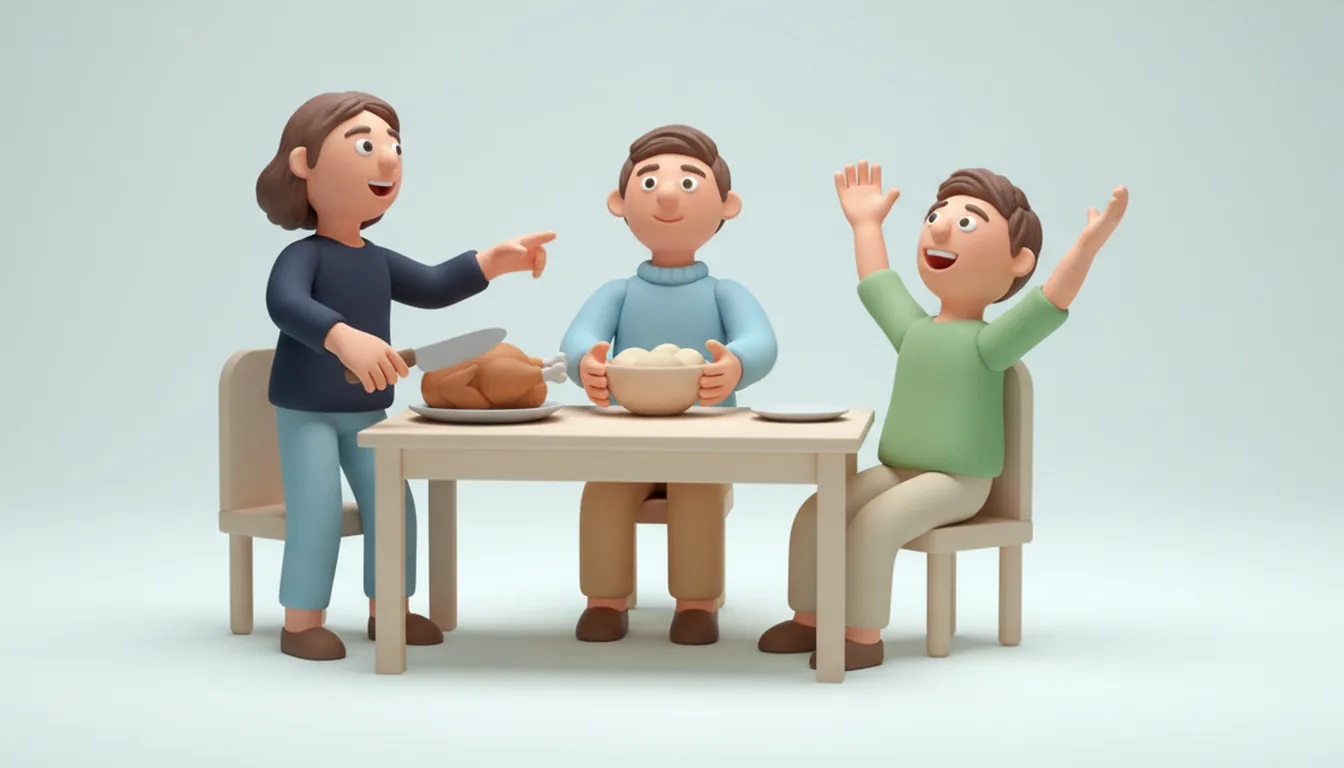
An example: at every family dinner, Anna carves the chicken and tells everyone where to sit. Her brother Mark, the middle one, passes the potatoes and changes the subject when things get tense. Their youngest brother, Leo, tells a story everyone has heard ten times, and they all laugh anyway. Anna is 38 now. She still gets called bossy, and Leo still gets away with everything.
What is birth order theory?
Birth order theory says that children in the same family grow up in different worlds. The first child gets their parents' full attention and later has to share it. The middle child is born into a family where the leader's spot is already taken. The youngest gets parents who are more relaxed and older siblings who look after them. An only child grows up mostly among adults.
The idea is about a hundred years old, and it has stayed popular ever since, in books, magazines and family jokes. It is easy to see why. Most people can point to a family where it fits perfectly.
Birth order traits, from oldest to only child
Here is what the theory usually says about each place. Read these as the picture people have in mind, more than as rules.
First born traits
The oldest child is often described as:
- responsible and reliable
- a natural leader, sometimes bossy
- careful, with high standards for themselves
- close to the parents' rules and values
- the one the younger ones came to for help
Many oldest children were given jobs early, like watching the little ones and setting an example. As adults, they often still feel in charge at family gatherings.
The middle child
Middle children are said to be the peacemakers. Between an oldest who leads and a youngest who gets the attention, they are pictured as flexible, easy to get along with and good at seeing both sides. The other half of the stereotype says they feel overlooked, and that they often build close friendships outside the family. Perhaps that is why they got a day of their own: National Middle Child Day, every August 12.
The youngest child
The youngest is often described as:
- charming and funny
- easygoing, sometimes a little spoiled
- willing to take risks
- good at getting others to help
Parents are often more relaxed by the time the last child arrives, and older siblings do some of the looking after. The youngest learns early that a joke or a smile goes a long way.
The only child
Only children are said to be mature, independent and at ease with adults, since they grew up mostly in adult company. The less kind side of the stereotype calls them spoiled or lonely, which many only children are tired of hearing.
Is birth order theory true?
Partly. Birth order changes a child's daily life in real ways. The oldest really does babysit more. The youngest really does get the hand-me-downs and a longer leash. Those jobs and habits can last into adult life, especially when the family is together.
The theory has a harder time with the person underneath. A 2015 study of about 20,000 adults from Germany, Britain and the United States found no birth order effect on the main personality traits. Firstborns did score a little higher on intelligence tests, about 1.5 IQ points per place. Plenty of oldest children are dreamy and relaxed. Plenty of youngest children are serious planners who run the family group chat. A big age gap, a parent's illness or a move to another country can change the picture completely. And a family with two children has no middle child at all, yet one of the two may still be the family's peacemaker.
Families also change over the years, so each child gets a slightly different pair of parents. A first child born when the parents were young and short of money grows up in another home from a last child born ten years later, when life was easier and the parents had learned to relax.
Why siblings from the same family are so different
If birth order made personality, siblings would be easy to predict. They aren't. Two children of the same parents, raised in the same house, can be completely different people. Birth order shapes the roles you play and the habits you pick up. It does not hand you a personality type.
Typeza counts 16 personality types, and the first, middle and last child can each land on any one of them. An oldest child gets the role of the responsible one either way. What changes is how they play it. Here are four grown-up oldest children, each of a different type:
- Harmonizer: looks after the younger ones by making home cozy, cooking for everyone and calming fights before they start.
- Commander: takes charge, gives orders and still defends the younger ones fiercely.
- Strategist: quietly sees problems coming, warns the others and plans a way around them.
- Encourager: cheers the younger ones on and pushes them to try new things, and hates being the one who enforces the rules.
All four fit the stereotype on paper, and each one lives the role differently. An Encourager can carry an oldest child's duties for years and never feel at home in them. A youngest child who is an Inspector may end up as the family's organizer, against every birth order chart.
The same holds between parents and children. Some families prove the old saying about the apple and the tree, and in others it does not fit at all. A child who fits nobody's picture at all is often called the black sheep of the family.
Birth order and relationships
Many articles say an oldest and a youngest child make the best couple, because one likes to lead and the other likes to be looked after. They also warn that two oldest children will fight over who is in charge. It makes a fun story. In real life, how two adults fit depends much more on who they are than on where they sat at the dinner table as kids.
The same goes for adult siblings. Whether you and your brother feel close has more to do with the relationship type between your two personalities than with who was born first. Types of sibling relationships shows how that looks between brothers and sisters, and family dynamics covers the roles people take on at home.
How to see what you share with your siblings
Anna, Mark and Leo grew up at the same table and still turned out very different. Which relationship type two siblings share has nothing to do with who was born first, and nobody can read it from the outside. Anna could take the free family compatibility test and send the invite link from her result to Mark, Leo or one of their parents. Anyone you invite must be at least 16, the minimum age for Typeza. Every time one of them finishes, both see the relationship type between them and the spots where they are most likely to get each other wrong. You can see your own type without an account.
Questions people ask
Does birth order affect personality?
It shapes habits and family roles, like who babysits and who gets away with more. It does not decide your personality type. Siblings in any birth order can have any of the 16 types.
What are first born characteristics?
Most people picture the oldest as the responsible one who leads the others and can be a bit bossy. Many oldest children know that role well, though their personality underneath can be very different.
What is birth order compatibility?
The popular idea that some birth orders make better couples, such as an oldest with a youngest. It is a fun guess. The fit between two adults depends far more on their personalities.
Where do twins fit in birth order?
Twins usually share one place in the family. The one born first sometimes gets treated as the older one, mostly by relatives who enjoy birth order jokes. Twins can be any two of the 16 types.
Why are siblings so different?
Each child has their own personality type, and birth order only adds roles and habits on top. Years in a shared bedroom do not give two siblings the same view of the world.
Sources
- Rohrer, Egloff and Schmukle, "Examining the effects of birth order on personality", PNAS, 2015: about 20,000 adults in the United States, Britain and Germany, no birth order effect on the main personality traits, a small one on intelligence.
- Wikipedia, "Birth order": Alfred Adler was one of the first to link birth order to personality.
Written by Virko Kask, founder of Typeza
Written with the help of AI tools.
One question for two, every week
A question to ask your partner, friend or family, and how different types tend to answer it.
Free. Unsubscribe any time.