
Personality vs character: the difference, with everyday examples
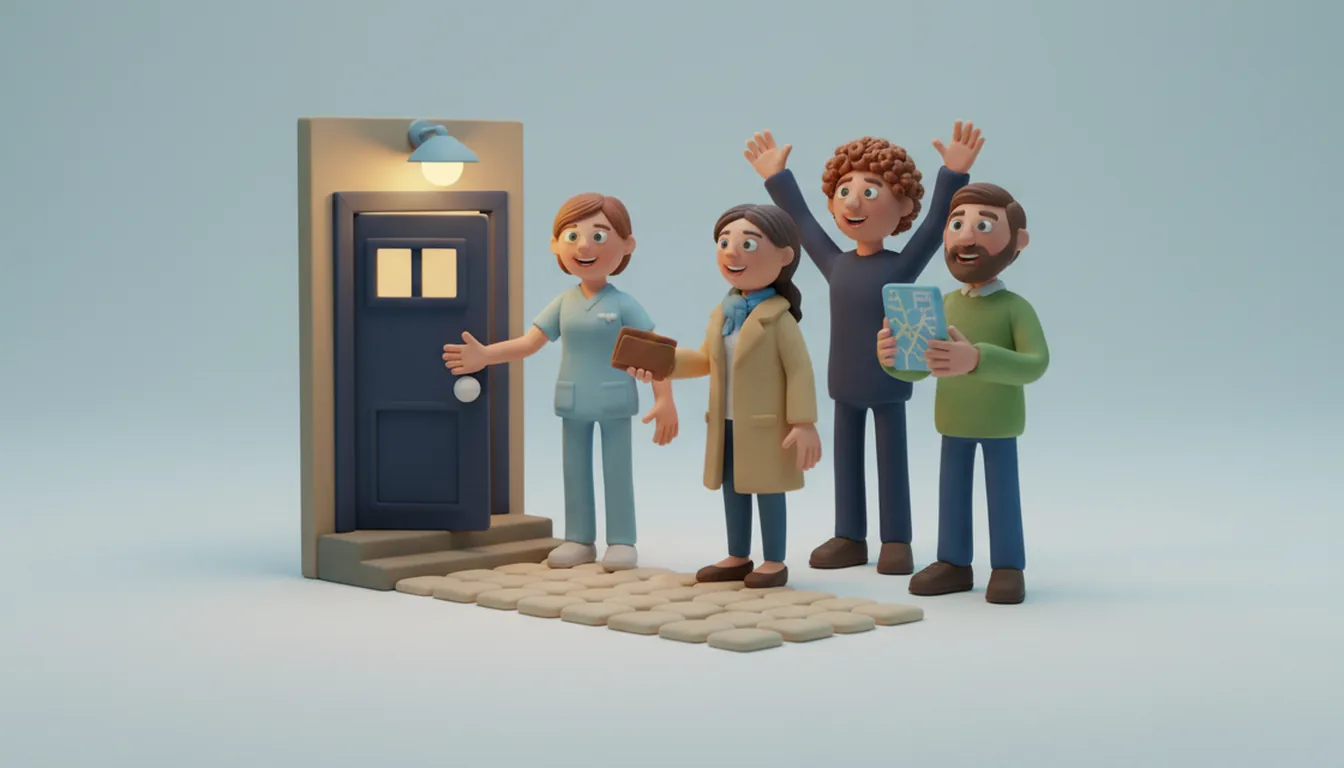
Personality is how you do things: your energy, your humor, your pace and what you notice first. Character is what you do when it counts, such as whether you tell the truth, keep your word and treat people fairly when nobody would find out.
An example: four friends share a taxi home after a concert, and halfway there Gus finds a wallet wedged into the back seat. It holds $340, two cards and a driver's license with an address across town. Gus reads the license out loud in a game show voice. Odette has the address in her maps app before he finishes. Kwame says almost nothing, then asks the driver to change course. Beatriz offers to knock on the door, since at one in the morning she looks the least alarming. None of them wants to keep the money. Four different personalities show the same good character that night.
Personality is the how, character is the what
Personality covers the patterns people see in you on an ordinary Tuesday. Are you talkative or quiet? Do you plan the weekend or wait to see what happens? Do you decide with your head, or by how the choice will feel for everyone? These patterns tend to stay with a person for years, and none of them is good or bad. A quiet person is no better than a loud one.
Character is about values in action. It shows in honesty, fairness, loyalty, courage, self-control and the plain habit of keeping promises. Unlike personality, character gets judged, and that is fair. When people say someone "has real character," they mean trust. Style has nothing to do with it.
A short way to hold the two apart: personality decides whether someone is fun, calm or interesting company. Character decides whether you can rely on them.
Everyday examples of personality and character
One moment can show both. A few pairs from daily life:
- At a dinner party. Telling stories until the table laughs is personality. Not mocking the guest who left early is character.
- In a group chat. Answering in long paragraphs or in single words is personality. Keeping a friend's secret when the chat turns to gossip is character.
- Planning a trip. Building a spreadsheet, or booking nothing until the day, is personality. Paying back your share before anyone has to ask is character.
- During an argument with a partner. Needing to talk it out at once, or needing an hour alone first, is personality. Never using something they told you in confidence as a weapon is character.
The personality half of each pair can go either way and still be fine. The character half has a right answer.
Traits vs character: which is which?
Many lists of traits mix the two kinds together, and that is where the confusion starts. Here is a rough sort.
Personality traits describe how you are. Think of outgoing next to reserved, or spontaneous next to organized. A curious streak belongs here as well, and so does a dry sense of humor.
Character traits describe what you stand for. Honesty and loyalty are the classic ones. Fairness, courage and patience belong on the list too, and so does being the person who returns what they borrow. Lines about honesty, loyalty and keeping your word are collected in integrity quotes.
Two questions help with any word you are unsure about. Can someone have a lot of it and still be a decent person? Then it is personality. Is it a choice made again and again? Nobody decides to be curious each morning. You do decide to be honest each time honesty costs you something, and those repeated choices are what people call character.
A few words sit right on the line. "Strong" is one of them. A strong personality takes up room and holds its views, while a strong character holds its values. A person can have plenty of one and very little of the other.
Can you change your personality or your character?
Your basic personality type tends to stay put. An introvert who learns to give a great toast at her brother's wedding is still an introvert who wants a quiet morning afterward. What moves over the years is everything built on top: skills, habits, and how at ease you feel outside your natural lean.
Character is far more in your hands. It grows from small decisions, like handing back extra change, admitting you forgot the dentist appointment or keeping a plan you would love to cancel. People strengthen their character at forty and at seventy. They can also wear it down, one convenient fib at a time.
Becoming a kinder or more reliable person does not require a new personality. It takes a few habits that suit the one you already have, which is the idea behind how to become a better person.
What "out of character" means
When someone acts out of character, they do something that does not fit how they usually are. A calm friend snaps at a waiter. A chatty brother goes silent for a week. A careful planner books a flight to Lisbon on a whim.
Here the word "character" is used in its wider sense, close to "personality." Dictionaries define the phrase as out of harmony with a person's usual character or disposition. So it covers a change in style, like the planner, and a slip in values, like a friend caught in a lie. Either way, a gentle question is worth asking. Behavior that is out of character can mean something is going on underneath, such as worry, exhaustion or a new chapter starting.
Some people act out of character on purpose for a while. They put on a personality mask and behave like a more outgoing or more serious type to fit into a new group or get through a hard season. The mask changes the surface of your personality. Your character stays the same under it, and a mask worn for too long gets heavy.
Where temperament fits in
Temperament is a third word that gets mixed in. People usually mean the speed and heat of someone's reactions: quick to flare up or slow to warm, easily excited or hard to rattle. You could call it the weather of a personality. Personality itself is wider and includes how you think, what you notice and how you make decisions. Character is about the values you act on, whatever the weather is doing.
So a hot-tempered man with good character may shout in a family argument and still never say the cruel thing.
The same values in different personality types
Good character looks different from one type to the next, and people can misjudge each other here. Six of the 16 types:
- Vitalizer: loyalty sounds like a loud defense of you, in public, on the spot.
- Analyst: honesty means precision. They will not round a fact up to make you feel better, or down to make themselves look good.
- Inspector: reliability is close to sacred. If they said Thursday at six, they arrive at ten to.
- Dreamer: kindness is quiet and well timed. They notice you are struggling before you say a word.
- Guardian: fairness has teeth. They will side against a close friend if that friend is in the wrong.
- Organizer: care is practical. They fix the shelf or drive you to the airport at dawn, and never bring it up again.
None of these people has more character than the others. They live out the same values through different personalities, and each can be misread by someone who expects good values to look like their own.
See the personality half for yourself
In the taxi, nobody had to debate whether to return the wallet. The only differences were in how. A personality test can show that how side and no more. Typeza's free personality test asks 41 times which of two statements fits you better. Your type appears the moment you finish, along with where you land on four base traits and a short profile of that type's strong points and soft spots. You can read every part of it without an account.
If a friend's way of doing things keeps rubbing you the wrong way, the cause may be personality and have nothing to do with character. Your result page lets you invite them to the same test, and the invite takes a free account. After their answers come in, you each see your relationship type and where your styles fit or grind.
Questions people ask
Is honesty a personality trait or a character trait?
It is a character trait. How you are honest, bluntly or gently, comes from your personality. Being honest in the first place is the character part.
Can someone have a great personality and a bad character?
Yes. A charming, funny person can still break promises or lie when it suits them. The reverse is common too: someone who seems a bit dull at parties and has a character you could build a house on.
What is the difference between character and characteristics?
Characteristics are any features of a person, from height to sense of humor. Character is narrower and means moral qualities.
Is there a test for character?
Some online surveys ask about character strengths, but they rely on how you describe yourself. Character shows over time, in what people do when it matters. A personality test can show your type, which explains your style, while your character shows in your choices.
What are internal and external character traits?
Internal traits are qualities inside a person, like patience, courage or curiosity. External traits are what others can see, such as how someone dresses, talks or moves. Character in the moral sense is internal, though it shows in what people do.
What is the difference between personality and identity?
Personality is your natural way of thinking and acting. Identity is how you see yourself and where you feel you belong, through your roles, roots and beliefs.
Sources
- Dictionary.com, "character". The wide sense (the traits that form a person's nature), the moral sense (honesty, courage, integrity) and the idiom "out of character."
Written by Virko Kask, founder of Typeza
Written with the help of AI tools.
One question for two, every week
A question to ask your partner, friend or family, and how different types tend to answer it.
Free. Unsubscribe any time.