
What does stuck up mean? Why quiet people get called stuck up
Stuck up, in two sentences
Stuck up means acting as if you're better than other people, too good to chat, join in or be friendly with people you think are beneath you. It's an informal word, and it's always meant as a criticism.
The woman at the far wheel
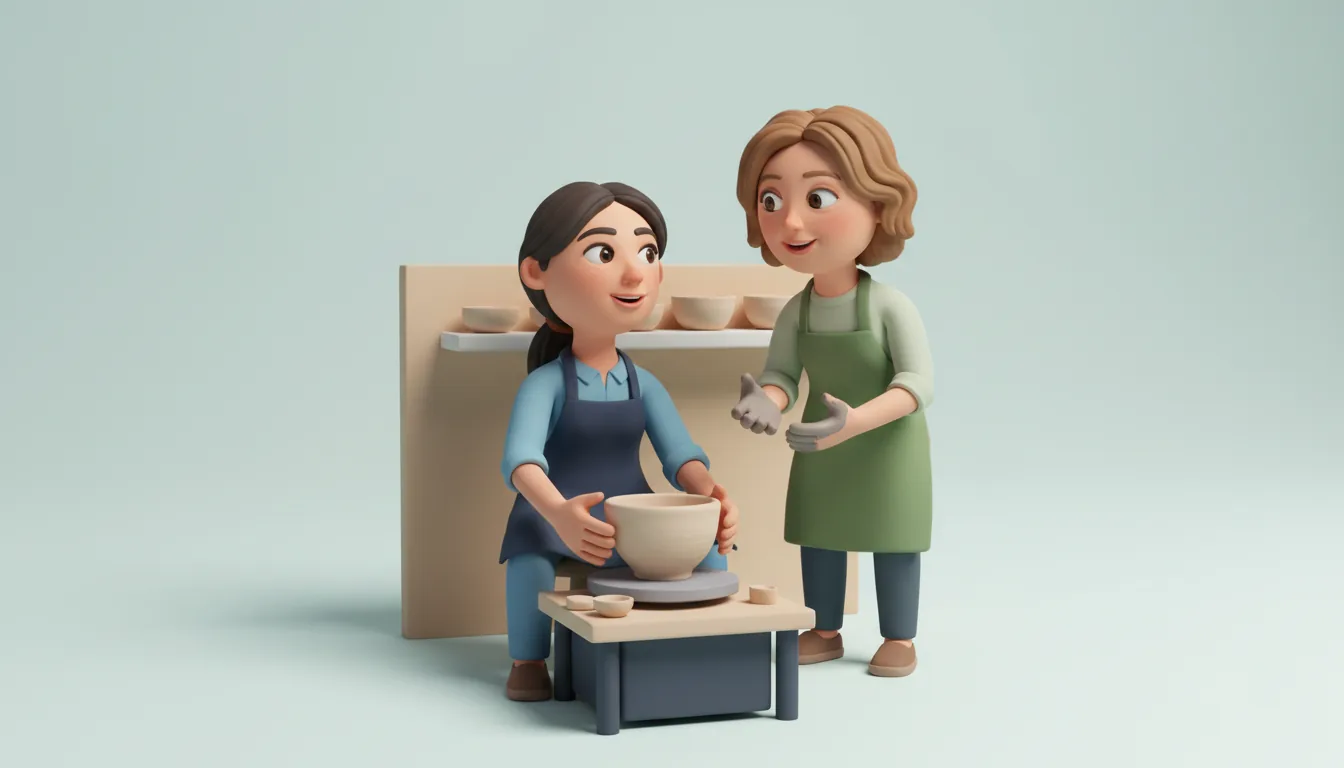
An example: Sanna, 29, joined a Thursday evening pottery class in October. She took the wheel in the far corner, said a quick hello when she came in and then worked in silence for two hours. She did the same the next week, and the week after. At the long table by the window, two women in the class decided she was stuck up. "She hasn't said one word to anyone," one of them said.
In the fifth week, Bea, 41, gave up on a bowl that kept wobbling and walked over to ask Sanna how she kept hers so even. Sanna lit up. For twenty minutes she showed Bea how she braced her elbows and wet her hands, and she talked the whole time. Later she admitted that a room full of people who already knew each other made her freeze, and she'd been scared of saying something silly. Bea went back to the window table and said, "She's shy. She's lovely, actually."
Plenty of people who get called stuck up are like Sanna. The word describes an attitude, but people often use it for a quiet face they haven't gotten to know yet.
What a stuck-up person actually does
Someone who really is stuck up shows it in how they treat people, more than in how much they talk. The signs tend to look like this:
- They're friendly to people who might be useful to them and cool to everyone else.
- They make little comments about other people's clothes, jobs or tastes.
- They turn down a plan because it seems beneath them.
- They talk down to waiters, cleaners or the new person in the group.
- They rarely ask other people anything about themselves.
A big ego is close but not the same. It's about needing to be admired, while stuck up is about holding yourself above other people.
Why quiet people get called stuck up
When someone doesn't talk much, other people fill the silence with a story. If the quiet person also looks calm and keeps to themselves, the story is often "they think they're better than us." A few everyday things feed it:
- No small talk. Skipping the chat about the weekend can look like a choice to stay apart.
- A still face. Someone who doesn't smile much while thinking can seem unimpressed.
- Short answers. "Yes, it was good" can sound like a door closing, even when it's just nerves.
- Sitting apart. Taking the corner seat, like Sanna's wheel, looks like distance from the outside.
- Being busy with something. Someone deep in their work, a book or their phone can seem to shut others out.
- Slow to warm up. Some people need several meetings before they relax, and the first few get misread.
A person who is cool and distant with everyone is a different case, and cold personality covers it. If fear of speaking up is the real reason someone holds back, that's shyness, and it has very little to do with feeling superior.
Stuck up, shy or reserved: how to tell them apart
From across a room, all three can look the same. Up close, a few things give it away:
- How they treat people who can't do anything for them. A stuck-up person is warmest to people with status. A shy or reserved person is equally quiet with everyone.
- What happens when you start the talk. A shy person often relaxes and talks more, like Sanna did. A stuck-up person stays short with you if they've decided you aren't worth the time.
- One on one versus in a group. Shy and reserved people are usually much easier to talk to alone. Stuck-up people tend to stay the same, or get worse with an audience.
- What they say about others. Reserved people rarely say much about anyone. Looking down on people shows up in small remarks.
A reserved person keeps their thoughts private until they trust you. A shy person wants to join in and feels held back. Neither one thinks they're better than you.
Stuck up or just confident?
Confident people can get the same label, especially when they're calm and don't ask for approval. The difference is in how they treat others. A confident person feels fine about themselves and is still curious about you, while a stuck-up person needs to stay above you. Confidence vs arrogance goes into that line in more detail.
Before you decide someone is stuck up
If a new person at work, in a club or in your friend group seems stuck up, give it a few tries before you settle on that word. Say hello first. Ask them one easy question when it's just the two of you, the way Bea walked over to Sanna's wheel. Watch how they treat other people too.
If they warm up, you've found someone who was quiet or nervous. If they stay polite with the people they find useful and cool with everyone else, the word may fit. Either way, you'll know from what they actually did.
Two people, two readings of the same person
Who reads a quiet person as stuck up depends partly on the one doing the reading. Take Sanna in the pottery class. Someone who warms to people through quick, lively talk, like a Vitalizer, may take her silence as a sign she doesn't want company. Someone who likes calm and space, like a Counselor, may see the same silence as focus, and sit down next to her without a second thought. Neither reading says much about Sanna herself. Typeza describes these as typical patterns between types, not as facts about any one person.
If people think you're stuck up
Being misread hurts, especially when you were nervous the whole time. There's no need to turn into someone else. A few small things change how people read you:
- Say hello first, and use names. It tells people you noticed them.
- Ask one question. "How did your week go?" is enough. People remember being asked.
- Explain once, lightly. "I'm quiet until I get to know people" clears up a lot.
- Pick one small thing to join. A walk to the bus stop counts, and so does a short chat at the end of the evening.
- Let it show on your face. If you're enjoying yourself, a small smile lets others see it.
- Ask a friend you trust. They can tell you whether it's your face, your timing or your seat that sends the wrong message.
If one person keeps calling you stuck up after you've been friendly, you've done your part.
Why people read you the way they do
How you come across often has as much to do with your personality type as with anything you do. Typeza shows your type, how people with other types tend to read you and why some people warm to you at once while others need time. Take the free personality test, then share what you get with a friend who knows you well.
Questions people ask
What is a stuck up person?
Someone who acts as if they're above the people around them. They decide who is worth their time by status, and you can see it most in how they talk to people they think matter less.
What is another word for stuck up?
Snobby, snooty and haughty are the closest. "Full of yourself" is a softer everyday version. The opposite is down to earth, for someone who is easy to talk to and treats everyone the same.
Is it stuck up or stuck-up?
Both are right. Write it with a hyphen when it comes before the word it describes, like "a stuck-up neighbor," and without one after a verb, like "she seemed stuck up."
What does it mean when someone calls you stuck up?
Usually it means they see you as distant and think you look down on them. Sometimes they're right about the distance and wrong about the reason, so it's worth asking yourself whether you came across as quiet, rushed or uninterested.
What does snobby mean?
Snobby means acting as if your taste, money or background puts you above other people, and letting them see it. It's close to stuck up, though snobby is more about taste and status than about keeping your distance.
Sources
- Dictionary.com, "stuck-up". Informal, snobbishly conceited, with snooty and snobbish as synonyms.
Written by Virko Kask, founder of Typeza
Written with the help of AI tools.
One question for two, every week
A question to ask your partner, friend or family, and how different types tend to answer it.
Free. Unsubscribe any time.