
How to be patient with someone you love, and why it is hard
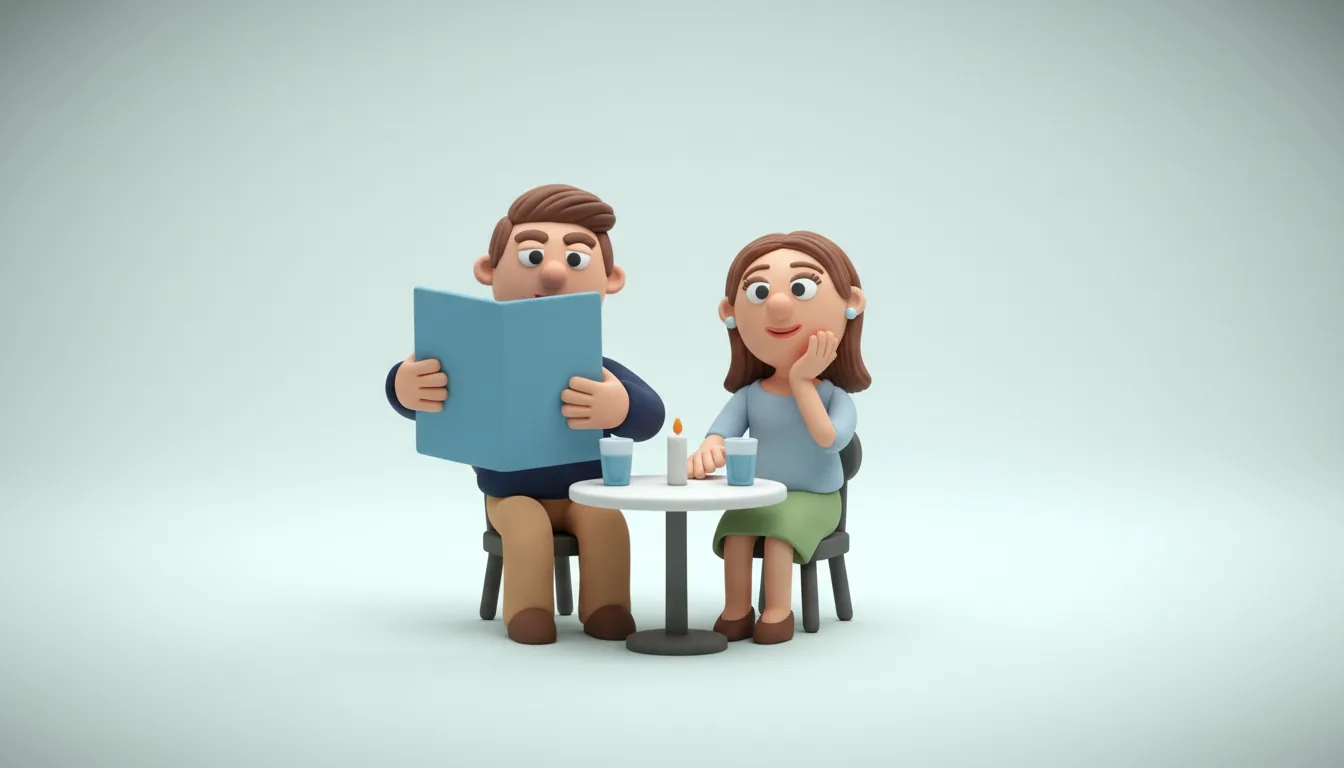
Being patient with someone means giving them time and room to be the way they are, without letting your irritation take over. With the people you love, that usually comes down to a few habits. You work out what you are really waiting for, you slow down your own reaction, and you say what you need before the frustration builds up. A lot of impatience between close people is about pace and style, and it gets easier once you see where it comes from.
An example: Linnea loves her partner Teo. She also times him, quietly, while he reads a menu. His record is fourteen minutes at a tapas bar. He reads every line, asks the waiter two questions and then orders what he always orders. Linnea decides in thirty seconds and spends the rest of the time drumming her fingers on the table. When her father tells the story of his first car for the third time in one dinner, she catches herself drumming again.
What does it mean to be patient with someone?
Patience is the ability to wait, or to put up with something slow or annoying, without getting upset or taking it out on the other person. With someone you love, it also means accepting that they work at a different speed and that their speed is not aimed at you.
Patience does not mean staying silent forever. A patient person can still raise a problem. They wait for a calm moment and say it once, clearly, instead of sighing about it for a year.
Why the people you love test your patience most
Strangers rarely make us lose our temper. The people closest to us can do it several times a day.
- You see them more. A habit that is charming once a month gets hard to bear twice a day.
- You expect more. You assume a partner or a parent should know how you work by now.
- You feel safe with them. At home you let irritation show that you would hide at a dinner party.
- Old patterns come back. Around parents and siblings, you can feel fourteen again within seconds.
What usually sits behind impatience
Often, impatience between close people comes from a clash of pace or style. These are the common ones.
- Decisions. One person decides in seconds, while the other wants to weigh every option.
- Talking. One gets to the point. The other tells the whole story, with every detail. Communication styles in relationships goes deeper into this one.
- Plans. One wants Saturday planned by Monday. The other decides on Saturday morning.
- Order. One sees every cup left on the counter, and the other does not see the cups at all.
- Feelings. One needs to talk a feeling through right now, and the other needs a quiet day first.
In none of these pairs is one side wrong. They are differences, and patience is the skill of living next to them.
Ten ways to be more patient with someone
- Name what you are waiting for. Is it the decision, the end of the story or a change in a habit? Knowing it can calm you down.
- Notice the first signs. Drumming fingers, a tight jaw, a short breath. Catch the irritation while it is still small.
- Give yourself a number. Count to ten, or decide to wait five minutes before you react.
- Ask whether it will matter tomorrow. Most long menus will not.
- Assume a good reason. Teo reads every line because he enjoys choosing. He has no wish to waste Linnea's evening.
- Listen to the end. Letting someone finish a story, even a long one, often takes less time than cutting in and arguing about it. How to be a better listener has tips for it.
- Fill the wait. Bring a book, a game or a question for the times you know you will be waiting.
- Say what you need, early. "Could you give me the short version first?" is kind when you ask it before you snap.
- Agree on a middle point. Five minutes for the menu, and then the waiter comes over. How to compromise in a relationship shows how to find a middle point that works for both of you.
- Look after yourself. Patience runs low when you are tired, hungry or stressed. Sleep and a proper meal help.
Patience with a partner, a friend and a parent
Being patient with a partner
Living together means seeing every habit up close. Pick the one or two things that really matter to you and talk about those. Let the rest go. A partner who feels judged all day may stop trying.
Being patient with a friend
Friends test your patience by running late, cancelling or talking about the same problem for months. Tell them in one calm sentence how it affects you. If a friend keeps coming back to the same worry, ask what they need from you: advice, or just someone who listens.
Being patient with a parent
As an adult child, you may find your patience thin around a parent who repeats stories, asks the same questions or still gives advice you did not ask for. It helps to remember that a repeated story is often how they share what mattered to them. When the old patterns start, a walk together can go better than a long dinner.
When patience stops being the answer
Patience has limits. Waiting while someone picks a dessert is one thing. Being put down or ignored again and again is something else. If you find yourself being patient with the same hurt for years, the problem probably needs a direct talk more than it needs more patience.
There is a quieter trap too. Some people stay calm on the outside while keeping a silent list of everything that annoyed them. One day the whole list comes out at once. Saying small things early is kinder for both of you. If small remarks tend to hurt you more than they should, how to not take things personally can help you tell a real problem from a misread one.
Being patient with yourself
The same skill works inward. You are learning a language, a new routine or a new role in your family, and progress is slower than you hoped. Talk to yourself the way you would talk to a friend who is learning. Notice what you did manage today. Expect bad days, and do not treat them as proof that you will never get there.
Why one person's pace tries another's patience
Personality type shapes both your own pace and what wears your patience down. Six of the 16 types show how differently people run:
- Harmonizer: calm and unhurried. They can put off unpleasant tasks, which tries faster partners, but they rarely run out of patience with people.
- Analyst: they think before they speak and want the full picture, so they can seem slow to decide. Vague answers wear out their patience quickly.
- Commander: quick to act and often impatient. Slow decisions and long explanations frustrate them, and they may push before others are ready.
- Dreamer: they take their time and like to understand before they act. Rushing them only slows things down.
- Entrepreneur: always looking at the next goal. Wasted time bothers them, and they can push themselves and others too hard.
- Craftsman: they like to watch first and get it right. Hurried, sloppy work tries their patience far more than slow work does.
When a fast type and a slow type love each other, both of them need patience, only for different things. The fast one waits. The slow one puts up with being hurried. Seeing it as a difference in type, instead of a lack of care, can make those moments calmer.
See where your pace and theirs part ways
Linnea and Teo will probably never order at the same speed. The free couples compatibility test is taken alone, at your own pace, which suits a slow chooser just fine. You pick one of two statements at each step. Your type and your four base traits, such as planning ahead or going with the flow, show up as soon as you finish, together with a free profile of your type. Seeing your own result needs no sign-up, and inviting your partner needs a free account. Once their answers are in, you are both shown your relationship type, with the easy parts of your match and the spots where one of you tends to wait for the other. The same test works with a friend, or with a parent if you are 16 or older.
Questions people ask
Is patience a sign of love?
Often, yes. Giving someone time to be themselves shows that you accept them. Patience is different from staying silent about real problems, though.
What is the difference between patience and putting up with something?
Patience waits for something that will pass, or for something that is simply different from you. Putting up with something means accepting a real problem in silence. The first is a strength, and the second can build resentment.
Written by Virko Kask, founder of Typeza
Written with the help of AI tools.
One question for two, every week
A question to ask your partner, friend or family, and how different types tend to answer it.
Free. Unsubscribe any time.