
How to plan a family reunion everyone enjoys
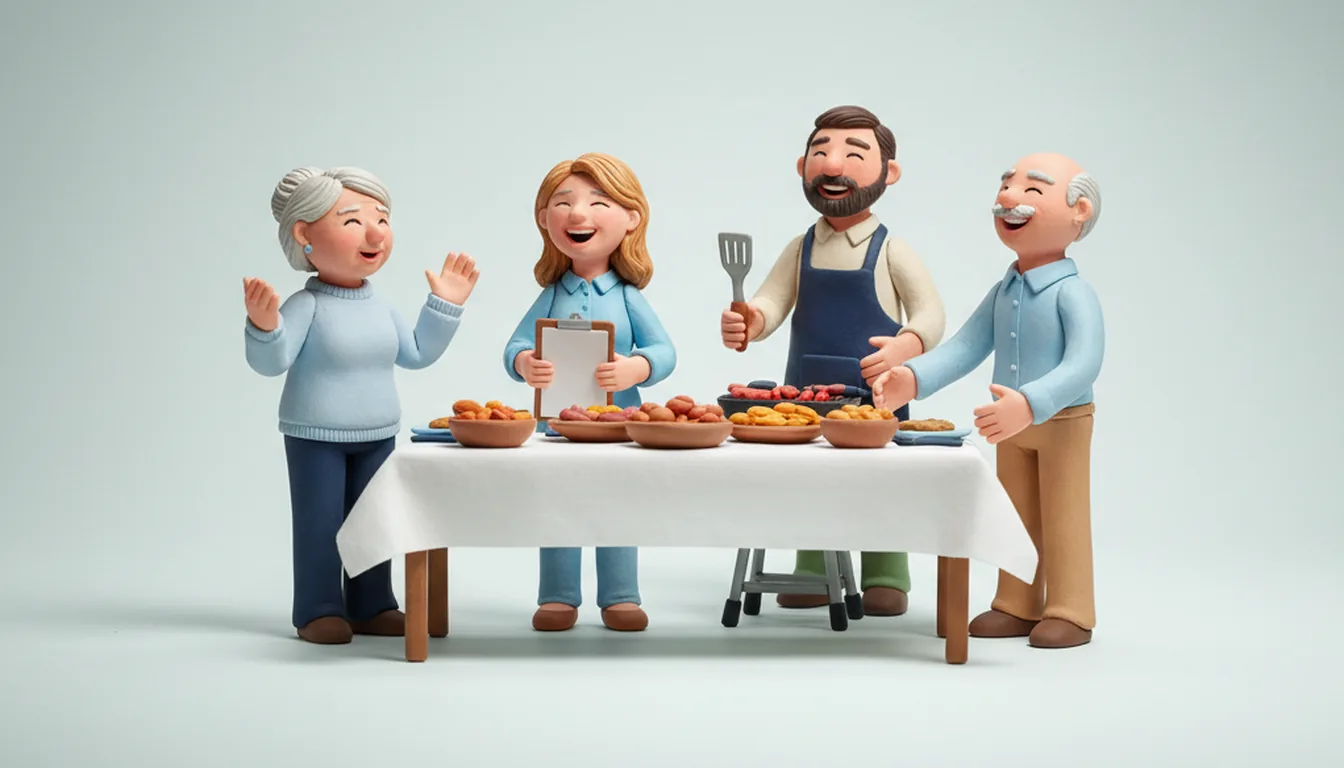
To plan a family reunion everyone enjoys, plan around the people first and the program second. Many families have talkers, doers, quiet ones and organizers. Give each of them a job that suits them, make room for noise and for quiet, agree ahead of time how to handle old arguments, and find a way to include the relatives who can't travel. The menu matters far less than whether people get to be themselves for a day.
An example: Carla, 52, offers to plan the first reunion of her mother's side of the family in eleven years, and for a month she plans the day she herself would enjoy. Every half hour has a slot. Two weeks before, her cousin Ben calls to say he'd gladly run the grill all afternoon if nobody makes him sit through a slideshow. Aunt Rosa asks whether there will be any time just to talk. Carla's brother Sam, who says about ten words at a party, offers to scan the old photo albums. So Carla throws out half her schedule. On the day, Rosa holds the whole table with stories about the farm, Ben works the grill for six hours, and Sam sits in the den with a scanner and a line of relatives waiting to see old pictures of themselves. Nobody checks the time.
What a family reunion is for
A family reunion is a planned get-together of relatives who rarely see each other: grown siblings, cousins, aunts, uncles and grandparents. It might last an afternoon or a whole weekend. People come to hear the oldest relatives tell their stories in person, and cousins who were close as kids come to find out they still like each other.
Planning a family reunion, step by step
If you're organizing one for the first time, this order keeps it manageable:
- Ask before you pick the date. Send two or three possible weekends and choose the one most people can make. Give extra weight to the oldest relatives and the ones traveling farthest. For a big family, plan six to twelve months ahead.
- Form a small team. Two or three people with different strengths beat one worn-out organizer.
- Settle money early. Say in the first message how costs will work, so nobody feels caught out later.
- Share the cooking. One person keeps the list of who brings what, or you end up with six potato salads and no bread.
- Keep the program loose. Fix one or two moments, such as the main meal and a group photo, and leave open time around them.
- Set aside one quiet room. More on that below.
- Send reminders a month before and a week before, with the start time and a phone number to call.
Talkers, doers, quiet ones and organizers
Many families sort themselves into four rough groups, and the day goes best when each group has a part to play.
The talkers
They remember every story and want to tell all of them. Put them at the door to greet people and introduce new partners. If anyone gives a toast, it should probably be one of them.
The doers
They get restless after an hour at a table. Give them something to do with their hands, like the grill, the setup, the games or the cleanup.
The quiet ones
They often enjoy the day more than they show, as long as nobody asks them to perform. Offer jobs that come with one-on-one talk, such as the photo-scanning corner, recording a grandparent's memories or drawing up the family tree.
The organizers
They are already writing a list. Hand them the schedule, the food plan and the money. Carla was one, and the best thing she did was give half her list away.
Family reunion ideas for each kind of relative
For the talkers, plan a story hour after the meal, a round of "who said it?" built from famous family sayings, and a toast to the people who couldn't come. Bring a few questions to ask your parents and grandparents and let the room listen to the answers.
For the doers, set up a cornhole or horseshoe tournament with teams mixed across the branches of the family, a cook-off of old family recipes, or a big jigsaw puzzle on a side table that people drift in and out of.
For the quiet ones, make a photo corner where people bring old albums to scan, or a memory jar where everyone writes down one family story to read aloud later.
For the organizers, there is the shared family recipe collection, a family tree drawn on a long roll of paper, or a "then and now" photo game they can prepare weeks ahead.
Games that work across ages include matching old photos to grown relatives, family trivia, two truths and a lie, and a team scavenger hunt around the house or yard. The funniest family reunion games are often built on the family's own stories. If your family likes a theme, keep it simple: a decade, the town the family came from, or one favorite recipe everyone cooks their own way.
Family reunion themes, and a few lines for the invite
A theme gives people something to talk about before they even arrive. Pick one and let it shape the invite, the games and the group photo.
- Back to the old hometown. Hold the day near where the family started, and ask the oldest relatives to walk everyone down the old street.
- The decade we grew up in. Everyone brings one photo from those years, and the music comes from that decade too.
- Field day. Sack races, tug of war and a relay, with each team made of cousins who don't usually sit together.
- A lake or camp weekend. Two nights in cabins, so the long talks have time to happen.
- Where we all live now. A big map on the wall, and everyone pins the place they call home.
- Talent hour. Anyone can do two minutes of anything: a card trick, a poem, a story about Grandpa.
- The cousins are in charge. One afternoon planned and run entirely by the cousins, from the games to the photo.
A short, warm line on the invite does more than a long schedule. A few to borrow:
- "It's been eleven years. Let's not make it twelve."
- "We're scattered across six cities. For one Saturday, we're all at the same address."
- "Different houses, same roots. Come home for a day."
- "Bring your stories, your photos and anyone who's joined the family since last time."
- "The aunts are planning this one, so you know it'll be good."
- "Same family, a few new faces. Come meet the ones you haven't met yet."
Keeping the peace: old arguments, seating and one quiet room
Many families have an old argument or two. Agree as a team that the reunion is not the day to settle them. If two relatives don't get along, talk to each of them beforehand and ask them to keep things friendly for one afternoon. Have a calm person ready to change the subject. Many of these clashes come from the family dynamics every family has, the old habits of who leads, who smooths things over and who steps back.
Don't leave every seat to chance. Put a talker next to a quiet one, mix the branches of the family at each table, and keep people with a long feud at opposite ends. Seat the oldest relatives in the middle, where others come to them.
Then pick one quiet room. Some people need a break from the noise every hour or two. A den, a porch or a back bedroom with a few chairs gives them somewhere to go without leaving. Say it out loud at the start: "The back room is for quiet. Go there anytime." If one relative always seems to be the odd one out, it helps to read up on the black sheep of the family before the day, then hand them a job they are good at.
Including the relatives who can't come
Plan one video call at a set time, so the far-away relatives see everyone at once instead of being passed around on one phone. Ask them to record a short story to play during story hour. They can also help from a distance by writing the trivia questions, gathering old photos by email or tracing one branch of the family tree. Afterward, send them the group photo and a recording of the stories.
Why "fun" means something different to every relative
One cousin wants a tournament, and another wants a long talk on the porch. Typeza sees personality type as part of that. Eight of the 16 types and the jobs that suit them:
- Ideator: bored by routine and hungry for something new. Put them on the trivia questions.
- Harmonizer: wants everyone comfortable and fed, and notices when Grandpa needs shade. A natural host for the quiet room.
- Vitalizer: loves a lively room. Let them welcome people and lead the toast.
- Inspector: likes order and a plan that runs on time. Give them the schedule.
- Diplomat: brings energy and reads the room fast. Good at running games and easing a tense moment.
- Strategist: finds a loud crowd tiring and does better one on one. Ask them to record a grandparent's stories.
- Organizer: shows care through practical work. The food list is safe in their hands.
- Counselor: a good listener who quietly checks on the relative who seems left out.
See why each relative wants a different kind of day
Relatives raised under one roof can still want opposite things from a reunion, and type is often part of the split. Your own type comes free from the family compatibility test. Text the link on your result to the cousin or sibling you understand least. When that relative has answered, you will both see your shared relationship type, with the easy ground and the topics that set you off.
Questions people ask
What do you do at a family reunion?
Eat together, tell stories, play a few games, take a group photo, and leave plenty of time for one-on-one talk.
Written by Virko Kask, founder of Typeza
Written with the help of AI tools.
One question for two, every week
A question to ask your partner, friend or family, and how different types tend to answer it.
Free. Unsubscribe any time.